 JAPANDIWOVEN
Inside the Guangxi Rattan Market: Where Woven Decor Is Traded
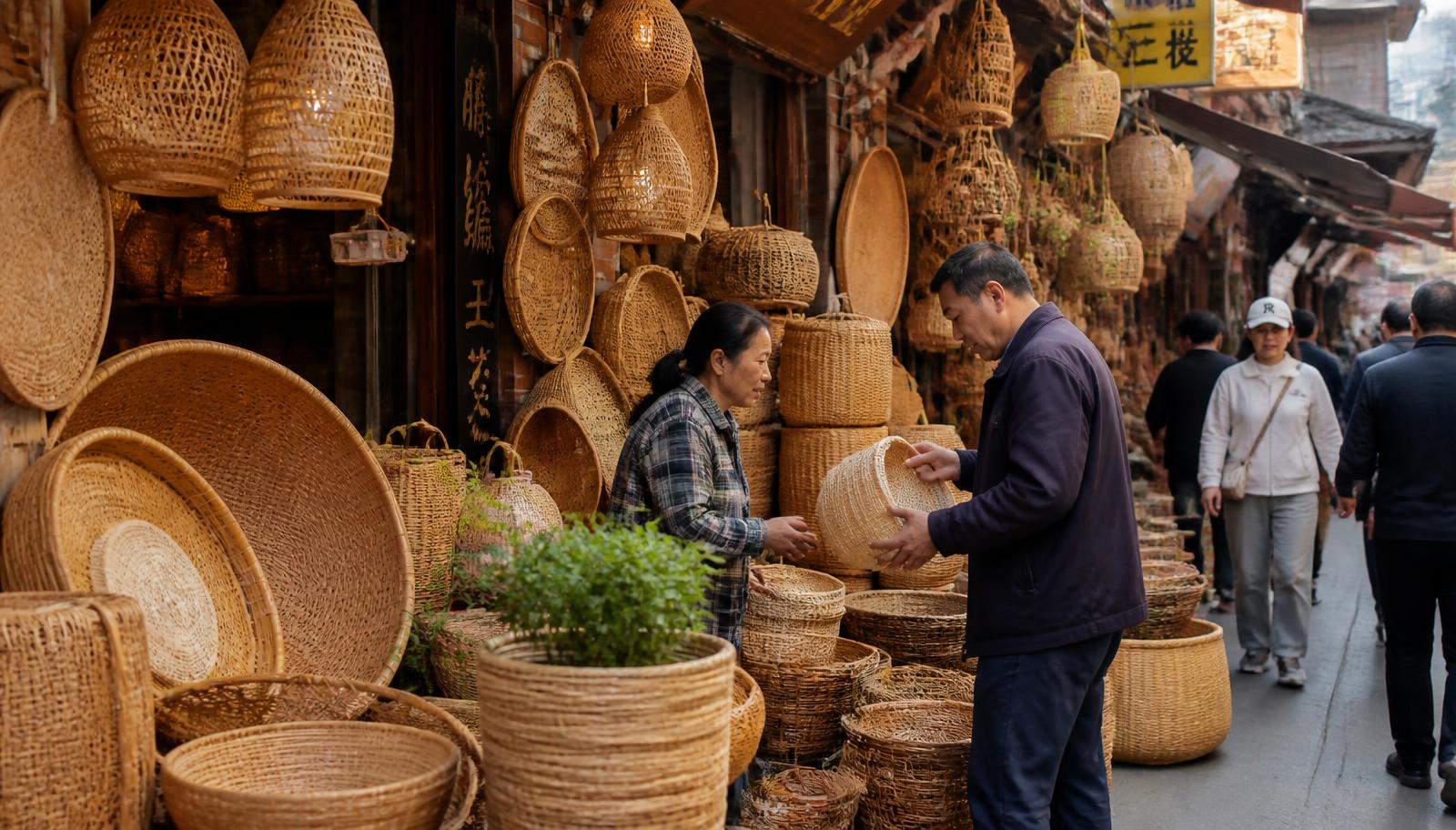
If you have bought a woven basket, a rattan pendant lamp or a wicker planter in the last decade, there is a real chance it moved through a single county in southern China. Bobai, in Yulin prefecture, Guangxi, is the country's densest cluster of rattan and bamboo weaving — and the trading market at its centre is where village output meets global demand.
What the market actually is
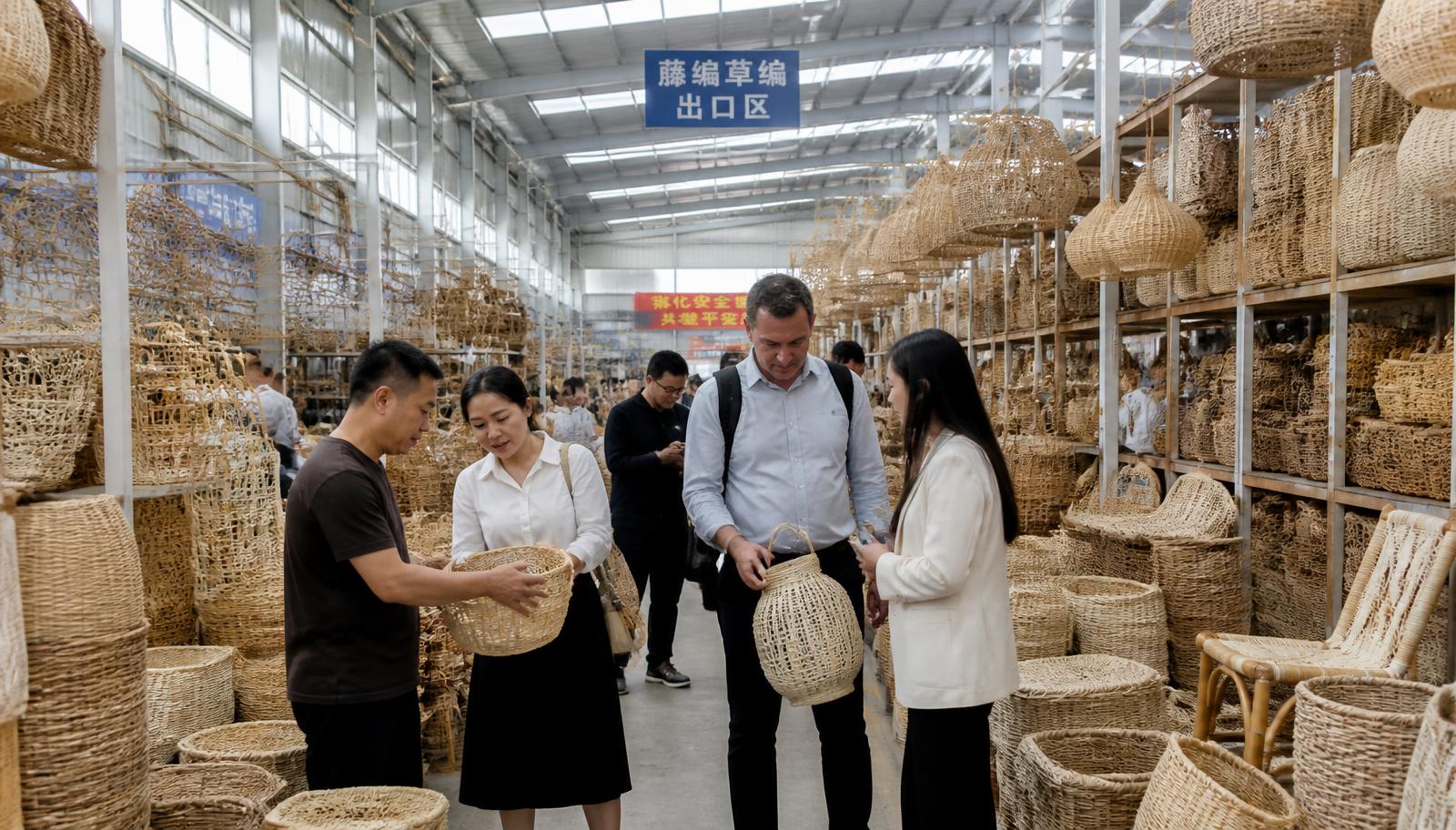
It is not one building. It is a trading city: streets of ground-floor showrooms with warehousing above, plus a covered exhibition hall for larger buyers. Sellers fall into three groups — village cooperatives selling raw output, small factories that finish and grade, and export agents who hold catalogues and handle documentation.
The seasonal rhythm
Weaving follows the farming calendar. Volume peaks after the autumn harvest and again in the winter dry season, when cured cane is at its best. Overseas buyers place peak-season orders in spring for autumn delivery; the market is quietest in mid-summer, when heat and humidity slow both weaving and drying.
How pricing works
- By weave density, not size. A tight twill basket can cost twice a loose plain-weave piece of identical dimensions.
- By material grade. Peeled core rattan commands a premium over unpeeled or mixed seagrass.
- By lot consistency. Matching 200 baskets to one colour tone costs more than selling them ungraded.
- By finishing. Rim locks, liners, metal hardware and lamp wiring each add a separate line.
What a sourcing visit looks like
Buyers walk the streets with a tape measure and a phone. Samples are pulled off the shelf, weighed, held up to the light to read weave tension, and photographed against a plain wall. Prices are quoted per piece at the workshop gate; freight, fumigation and certification are negotiated separately. Serious orders end with a signed sample — the physical reference every later shipment is graded against.
A signed sample settles more disputes than any contract clause. Whatever it looks like is what the container has to look like.
Why we buy here
Working directly in Bobai keeps three things under our control: which workshops weave our pieces, what the weavers are paid per piece, and how tightly a run is graded before it ships. Every JapandiWoven piece is quoted, sampled and inspected inside this ecosystem rather than through a distant trading company.
FAQ
Where is the largest rattan and bamboo wholesale market in China?
The woven crafts trading market in Bobai County, Yulin, Guangxi is the largest concentrated hub, supported by hundreds of surrounding village workshops.
Can individual buyers purchase at the Guangxi rattan market?
The market is wholesale-first. Most sellers quote per piece with minimum order quantities, though small trial orders are common for new buyers.
What is the minimum order quantity for handwoven rattan decor?
It varies by workshop, typically from a few dozen pieces for stock designs up to several hundred for custom sizes, colours or hardware.
When is the best season to source woven products from Guangxi?
Autumn and the winter dry season, when cured cane quality is highest and workshop capacity peaks after the farming harvest.
How does JapandiWoven source its pieces?
We buy directly from workshops in and around Bobai, sign physical reference samples, and inspect each run for weave density and colour consistency before shipping.