 JAPANDIWOVEN
How Rattan Is Made in Guangxi: Inside China's Handweaving Craft
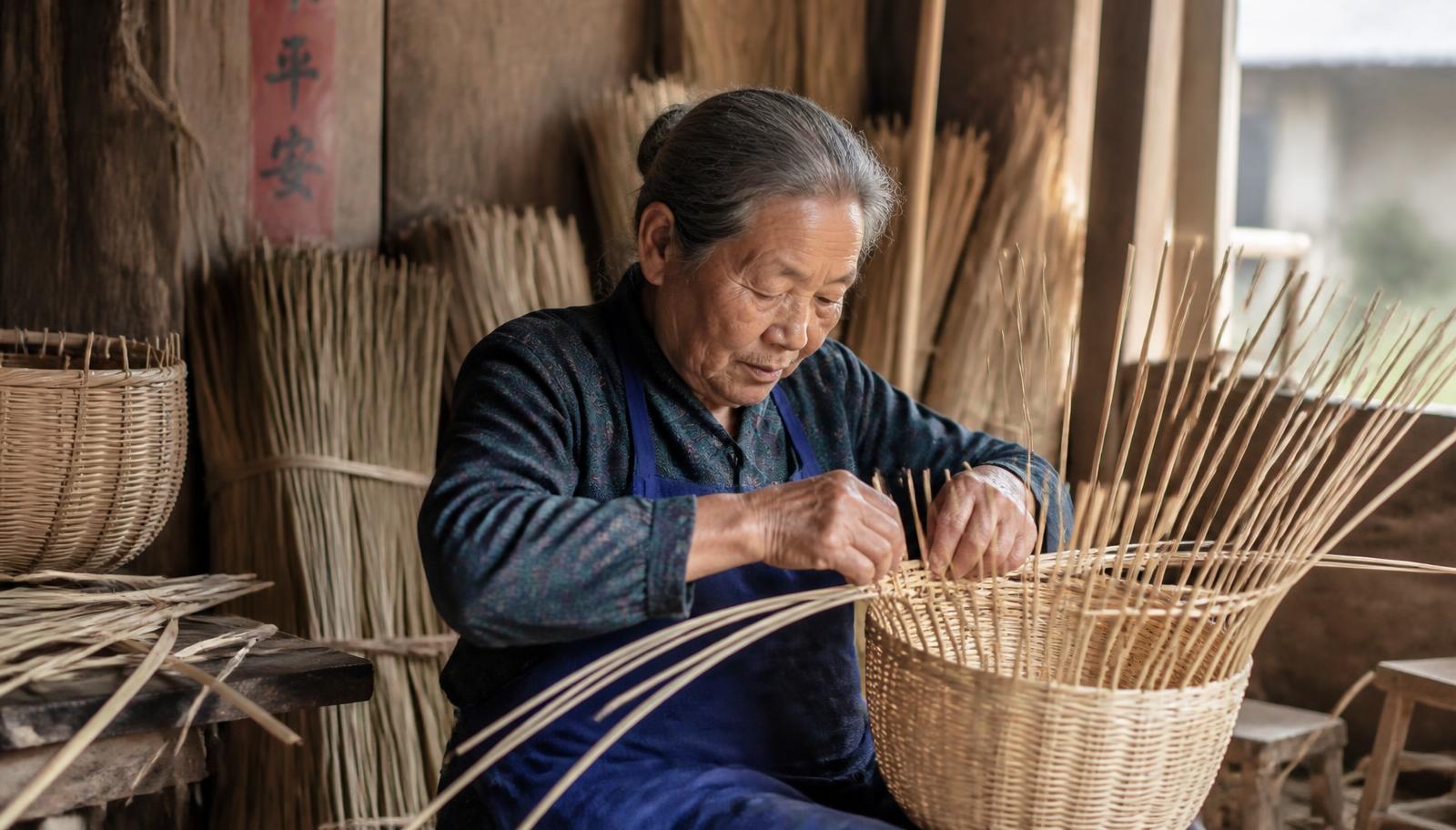
Almost every handwoven rattan basket sold in the West passes through a village workshop somewhere in Southeast Asia or southern China. Ours come from Bobai County in Guangxi, a subtropical region where rattan, bamboo and seagrass grow within an hour of the workshops that weave them. This is what actually happens between a standing cane and a finished piece.
1. Harvesting the cane
Rattan is a climbing palm, not a tree. Mature stems are cut by hand in the winter dry season, when sap content is lowest and the fibre is least prone to mould. Cutters leave the root system intact so the same clump regrows in three to five years — one reason rattan is considered a rapidly renewable material rather than a hardwood substitute.
2. Curing and de-sugaring
Fresh cane is boiled or smoked to draw out starch and sugars that attract insects. In Guangxi this is often done in open-air kettles of hot water, followed by a sulphur-free drying period. Skipping this step is the single most common cause of the dark spotting you see on cheap imported rattan.
3. Drying in the sun
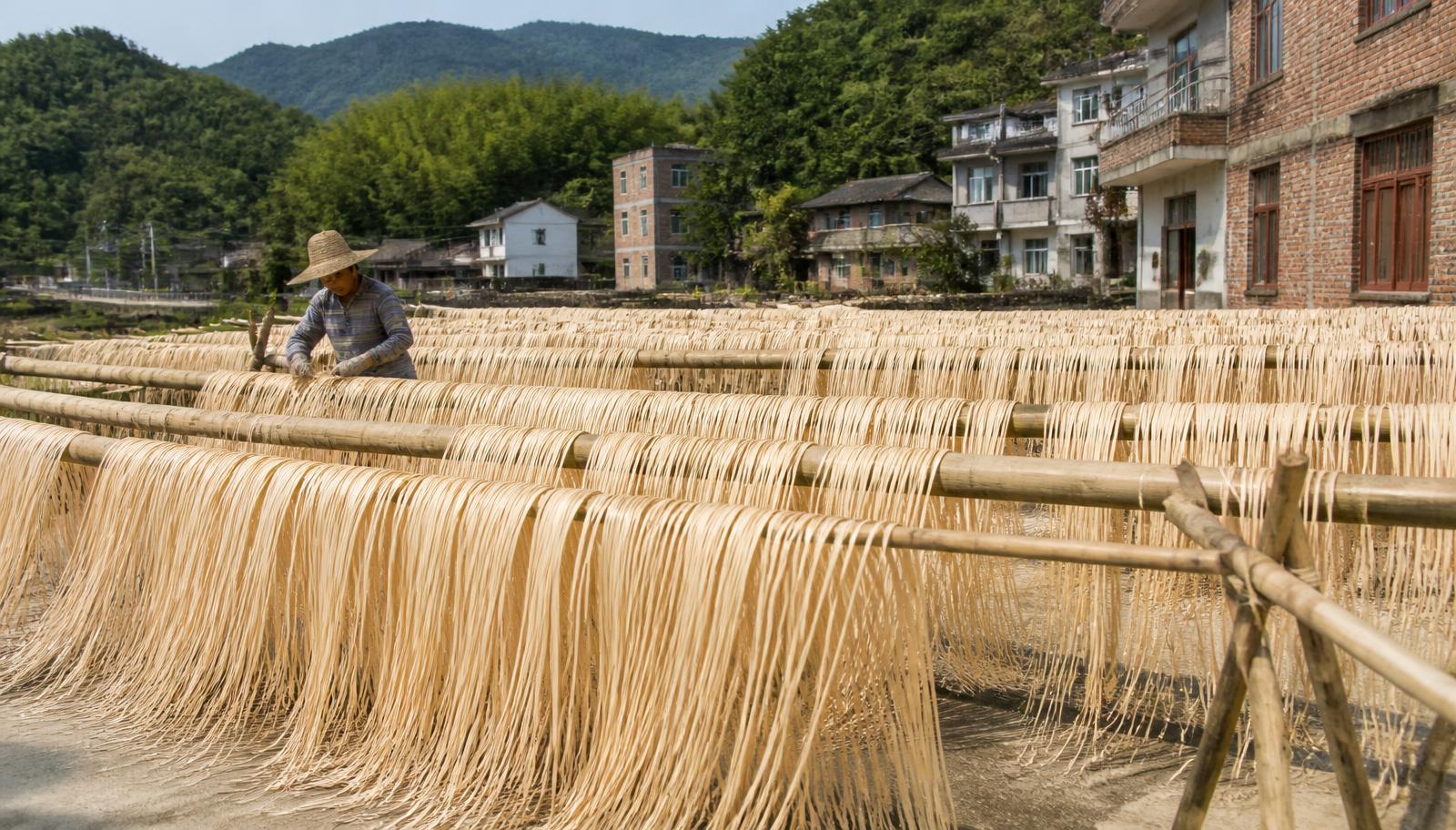
Canes are laid on bamboo racks for one to three weeks, turned daily, until moisture content falls to roughly 12–15%. Under-dried cane shrinks after weaving and the whole piece goes loose; over-dried cane snaps at the bend.
4. Splitting and sizing
A single cane is split into core (the round inner pith) and peel (the glossy skin). The core becomes the flexible weaving strand; the peel is reserved for binding and rim wraps. Sizing is done on a hand-fed gauge — a good splitter can hold a 0.2 mm tolerance by feel alone.
5. Building the frame
Thicker cane or bamboo is steam-bent over a wooden jig to form the base ring and uprights. The jig is the piece of tooling that gives a workshop its house style: two villages ten kilometres apart will produce visibly different shoulder curves from the same instructions.
6. Weaving
This is the part no machine has replaced. Depending on the pattern — plain, twill, hexagonal, or the open lattice used in pendant lamps — a medium basket takes two to six hours of continuous work. Weavers are paid per piece and most work at home, often alongside farming.
The rhythm never speeds up. If you rush the weave, the tension is uneven and you see it the moment light passes through the wall.
7. Rim locking and finishing
The exposed ends are trimmed, folded back and locked under a wrapped rim. Edges are singed and sanded to remove hairs, then the piece is fumigated or heat-treated for export compliance.
8. Quality, colour and export prep
Finally, pieces are graded for weave density, colour consistency and roundness, then matched into lots. Natural rattan varies in tone from honey to pale ash; a good grader builds a set that reads as intentional rather than mismatched.
Why the process matters to what you buy
- Rapidly renewable. Rattan regrows in years, not decades, and harvesting keeps forest cover intact.
- Low energy. Hand weaving uses almost no electricity; the footprint sits in shipping, not manufacture.
- Repairable. A broken strand can be re-woven; a moulded plastic basket cannot.
- Variation is the point. Slight differences in tone and weave are evidence of a human hand, not a defect.
FAQ
How long does it take to make one handwoven rattan basket?
Between two and six hours of weaving for a medium basket, plus several weeks of upstream curing, drying and splitting of the cane itself.
Is rattan a sustainable material?
Yes. Rattan is a fast-growing climbing palm that is cut without felling the plant and regrows in roughly three to five years, and hand weaving consumes very little energy.
What is the difference between rattan, wicker and bamboo?
Rattan and bamboo are materials; wicker is a weaving technique. Bamboo is hollow and rigid, rattan is solid and can be steam-bent, and both can be woven into wicker.
Where in China is rattan weaving concentrated?
Bobai County in Yulin, Guangxi is the largest cluster in China, with hundreds of workshops and a dedicated wholesale trading market for woven crafts.
How do I care for a handwoven rattan piece?
Keep it out of prolonged direct sun and standing water, dust with a dry brush, and wipe with a barely damp cloth. Occasional light misting prevents strands from drying brittle in heated rooms.