 JAPANDIWOVEN
How to Care for Hand-Woven Bamboo & Rattan Products
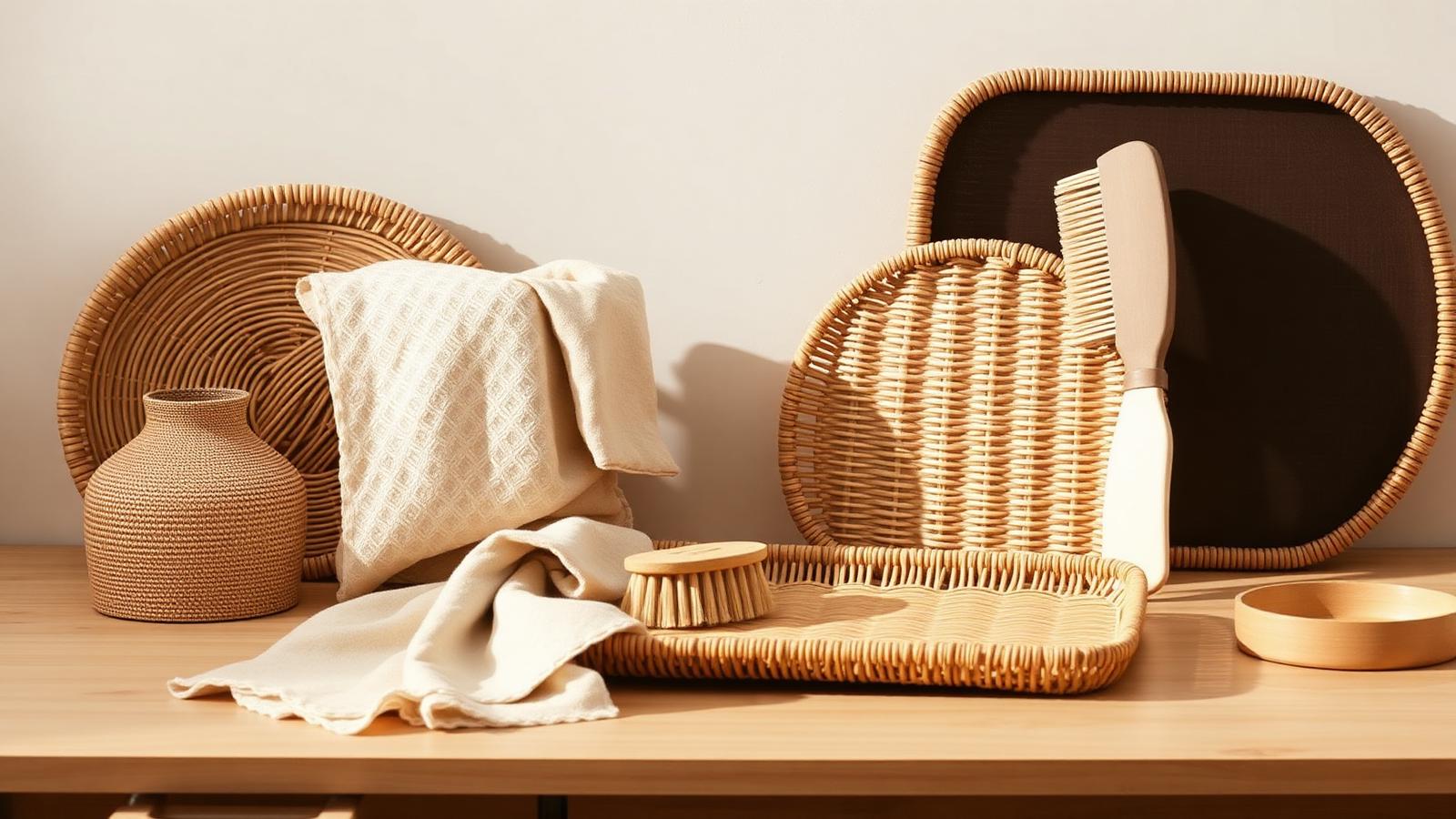
Hand-woven bamboo and rattan are living materials. Cared for properly, a basket woven in Guangxi will outlast several generations of plastic storage — and grow a warmer patina while doing it. Cared for badly, it will dry out, fade or mould within a season.
This guide covers everyday home care and the routines we recommend to hotel housekeeping teams.
Daily and weekly care
- Dust dry, first. A soft dry cloth or a natural-bristle brush lifts dust out of the weave without pushing it deeper. Brush along the direction of the strands.
- Damp-wipe, never soak. For marks, wipe with a slightly damp cloth and dry immediately. Soaking swells the fibres, loosens the weave and invites mould.
- No harsh chemicals. Bleach, solvents and alcohol sprays strip the natural surface and bleach plant-dyed accents. Mild soap in water, wrung almost dry, is enough.
- Dry away from direct sun. Sunlight is the fastest way to fade a natural finish. Air-dry in shade with good airflow.
Humidity is the real variable
Bamboo and rattan are happiest between roughly 40% and 60% relative humidity.
| Environment | Risk | What to do |
|---|---|---|
| Very dry (heated rooms, desert climates) | Brittleness, splitting | Mist lightly once a month, or keep a plant nearby |
| Very humid (bathrooms, coastal, tropical) | Mould, musty smell | Ensure airflow, dry after use, air outdoors in shade monthly |
| Direct sun | Fading, drying | Move out of direct beams or rotate the piece |
By product type
Baskets and storage. Do not overload. Lift by the body, not only by one handle — repeated single-handle strain is the most common cause of weave failure.
Trays and tabletop. Use a liner or cloth under wet glasses. Wipe spills immediately; do not leave liquid standing in the weave.
Lampshades and pendants. Dust with a brush attachment on low suction. Use LED bulbs — they run cool and will not scorch the fibres.
Planters. Always use a waterproof inner pot. Never water a plant directly inside a woven planter.
Housekeeping routine for hotels
1. Daily: dry dust guest-room baskets and trays during turndown.
2. Weekly: damp-wipe and inspect handles and rims for loose strands.
3. Monthly: rotate stock, air pieces in a shaded, ventilated space for a few hours.
4. Quarterly: replace any piece with a broken strand rather than repairing it in place — a snagged strand catches guest clothing.
Keeping 5–10% of an order as replacement stock keeps guest rooms consistent without waiting on a new production run.
Fixing common problems
- Loose strand: trim flush with sharp scissors; do not pull it.
- Musty smell: air in shade for a day; a shallow bowl of baking soda inside the basket overnight helps.
- Mould spots: wipe with a cloth dampened in a 1:1 white vinegar and water mix, then dry thoroughly in a ventilated space.
- Dullness: a very light coat of food-safe mineral oil on bamboo restores warmth. Test on the base first.
What is normal, and what is not
Slight colour variation, small texture differences and a gradual deepening of tone are features of handcraft, not defects. Broken strands, a collapsed rim or a wobbling base are not — send us photos within 7 days of delivery and we will arrange a replacement.
Treat these objects like wooden furniture rather than like plastic, and they will simply keep working.