 JAPANDIWOVEN
Why Bamboo Home Goods Went Global
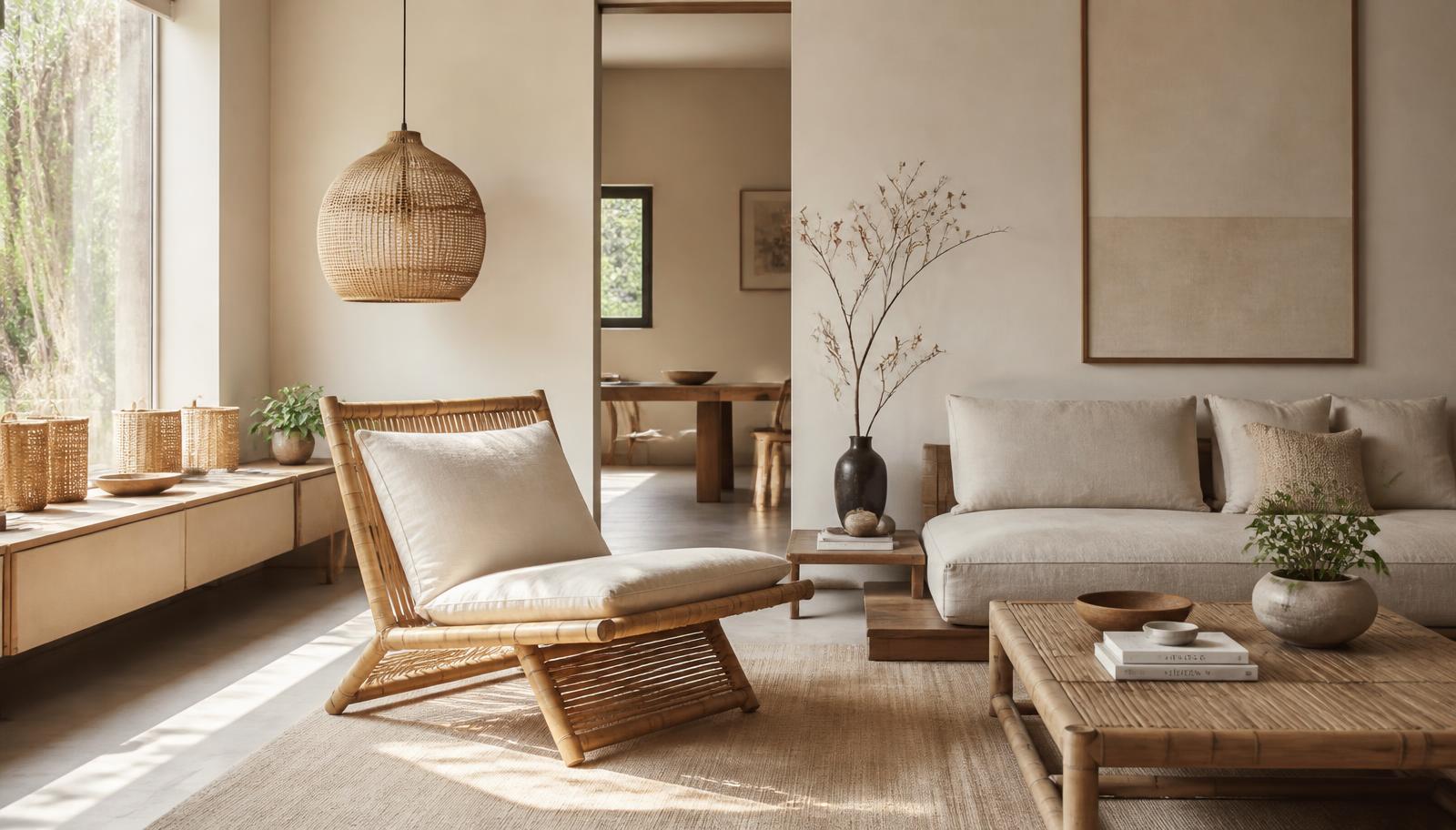
Ten years ago, bamboo in the home meant a cutting board and little else. Today it appears as lighting, storage, seating, tableware and bath accessories in hotels, rentals and family homes across three continents. The shift is not decorative fashion alone. It sits at the meeting point of material science, supply chain economics and a quieter way of living.
A grass that grows like no timber can
Bamboo is a grass, not a tree. The species used for furniture and homeware reach harvest maturity in three to five years, against decades for hardwood. Because the root system stays intact, a managed grove is cut selectively year after year without replanting. For a buyer, that translates into a renewable raw material with a short and repeatable cycle — the practical reason bamboo keeps appearing in sustainability commitments from hotel groups and retailers.
What is actually driving the demand
Three forces are pushing bamboo into mainstream interiors.
The first is the Japandi and warm-minimal aesthetic. Rooms are being stripped back to fewer, better objects, and pale natural fibre gives warmth where plaster and oak alone feel cold. Bamboo reads calm in photographs, which matters in a market where interiors are discovered on screens.
The second is procurement pressure. Hospitality and retail buyers now report on materials. A bamboo amenity tray or waste bin answers a question a plastic one cannot, and it does so at a price that does not need defending.
The third is plain performance. Bamboo has a high strength-to-weight ratio, resists warping when properly dried, and takes a hand-finished surface well. In bath and kitchen settings it holds up to daily use in a way that lighter decorative fibres do not.
Where the growth is showing
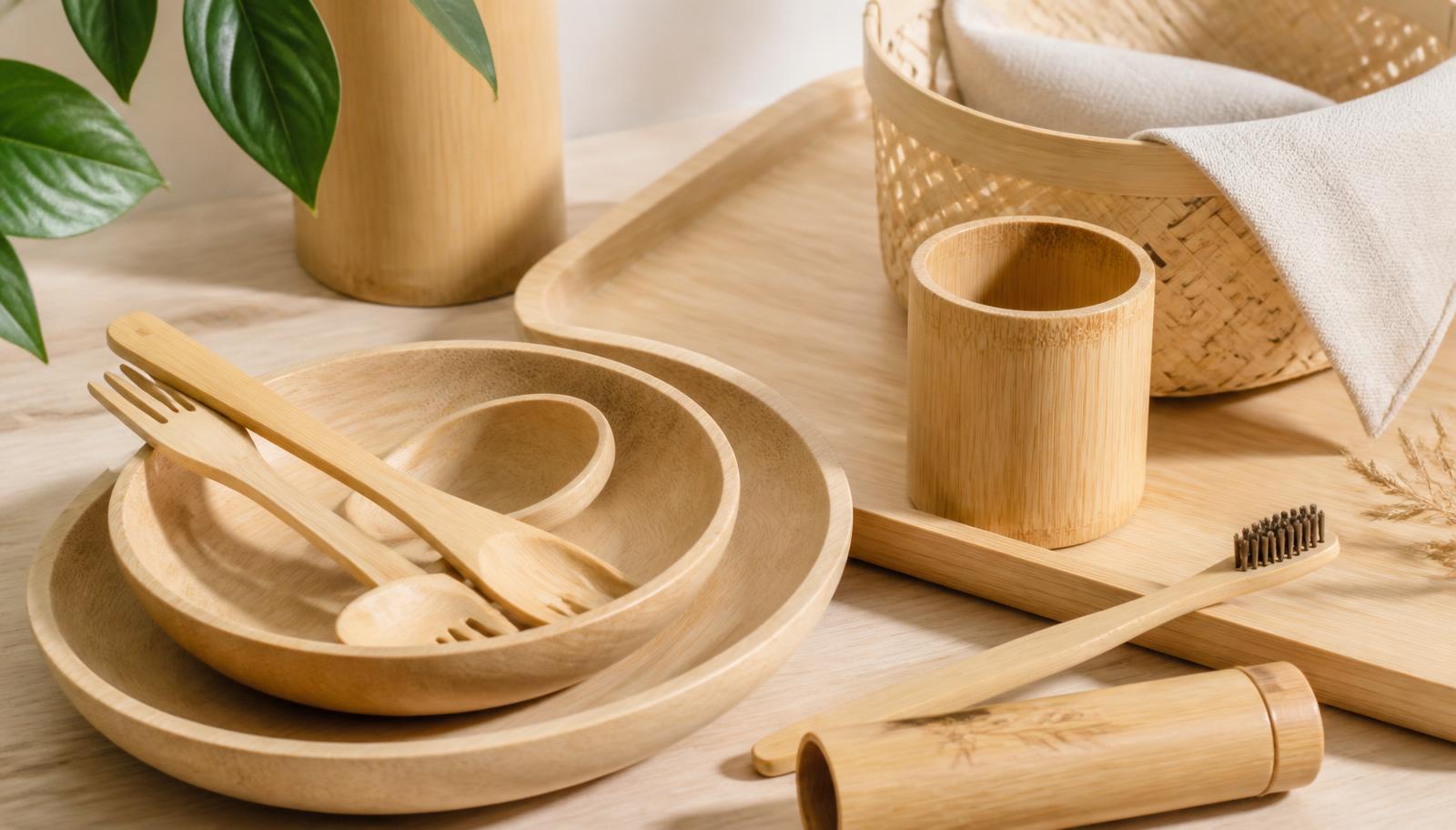
In North America, the pull is strongest in storage and organisation — baskets, trays, bath sets — because those categories replace plastic one shelf at a time. In Europe, it is furniture and lighting, where bamboo sits comfortably with Scandinavian forms. In Japan, bamboo carries centuries of domestic use, so demand skews to refined everyday pieces and hospitality amenities rather than statement furniture.
How to buy bamboo well
Not all bamboo goods age the same way. A few things separate pieces that last from pieces that split within a season.
Ask how the bamboo was dried. Kiln-dried and moisture-controlled stock stays stable across climates; air-dried material shipped straight from a humid region will move in a dry apartment.
Ask what the finish is. Water-based lacquer or natural oil keeps the material breathable and repairable. Heavy plastic coating hides the grain and peels.
Ask how joints are made. Woven and pegged joinery, tightened by hand, outlasts staples and glue alone.
Ask about origin and continuity. A workshop that has run the same grove and the same crew for years can repeat a finish across a reorder; a trading intermediary often cannot.
The quiet argument
Bamboo did not become global because it was marketed as green. It spread because it is genuinely renewable, genuinely strong, and genuinely beautiful in the kind of rooms people now want to live in. That combination is rare, and it is why the material is still growing its share of the home rather than passing through as a trend.
Is bamboo really more sustainable than wood?
For most homeware uses, yes. Bamboo reaches harvest maturity in three to five years and regrows from an intact root system without replanting, while hardwood needs decades. The finish and shipping method still matter to the overall footprint.
Does bamboo furniture last?
Properly kiln-dried bamboo with oiled or water-based finishes and hand-tightened joinery lasts for years of daily use. Keep it out of standing water and direct heat, and re-oil occasionally.
Is bamboo suitable for hotels and commercial spaces?
Yes — bamboo trays, bins, amenity sets and baskets are widely used in hospitality because they are light, strong and easy to replace as part of a documented sustainable sourcing policy.