 JAPANDIWOVEN
China's Bamboo Belt: Capacity Meets Intangible Heritage
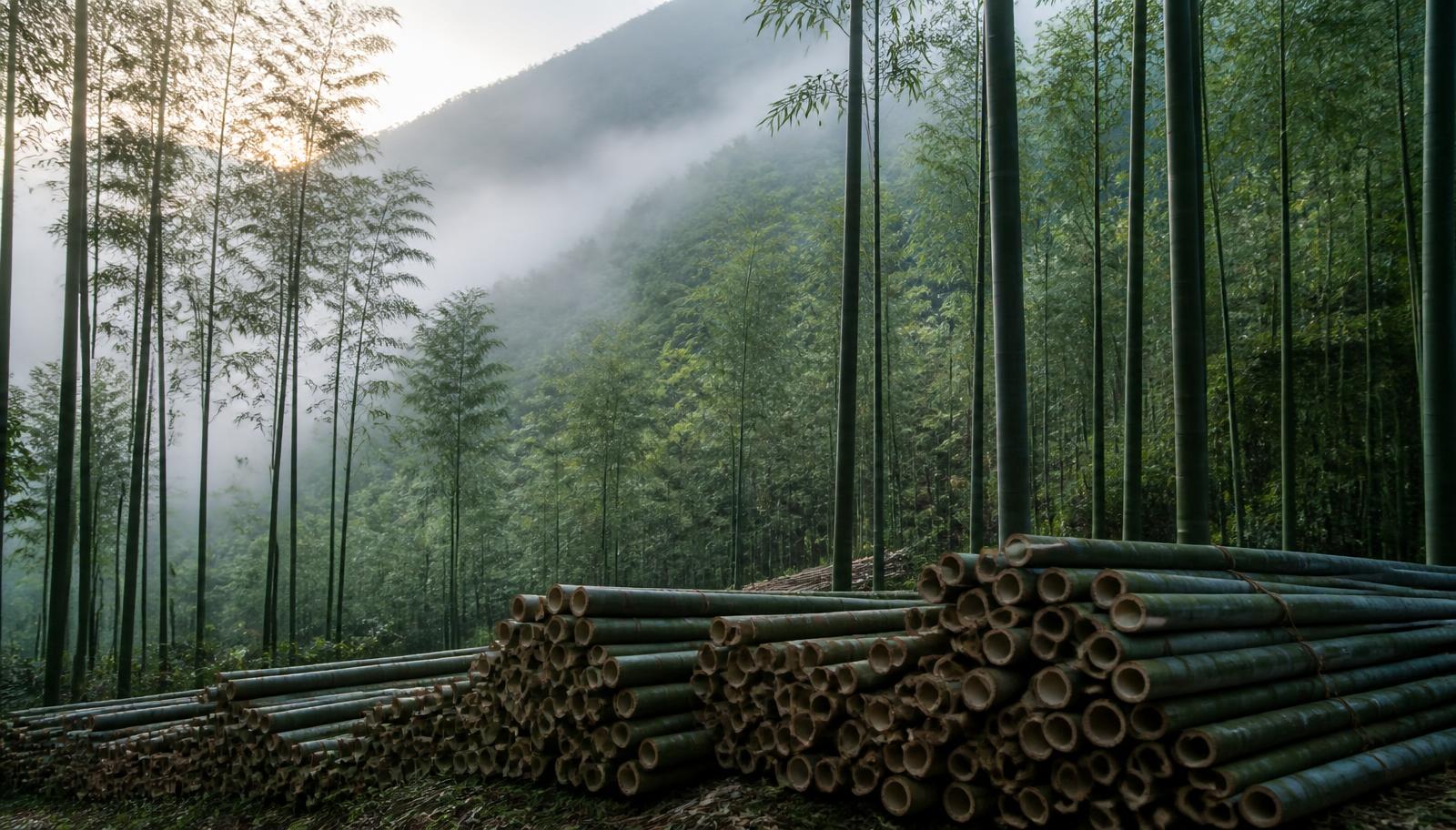
There is a stretch of southern China — running through Fujian, Jiangxi, Zhejiang, Hunan, Sichuan and Guangxi — where bamboo is not a design choice but a landscape. It clothes the hills, sets the rhythm of the farming year, and feeds workshops that have been splitting and weaving culms for longer than most countries have had furniture industries.
The scale behind the material
China holds the world's largest area of managed bamboo forest and the deepest processing base to go with it: nurseries, harvest crews, splitting mills, steam and kiln drying, weaving workshops, finishing lines and export packing, usually clustered within a short drive of one another. That density is why a bamboo lamp or basket can be sampled, corrected and produced without the material ever crossing a border.
Volume alone is not the interesting part. What the clustering really buys is iteration. A weaver, a finisher and a QC lead can stand around one sample in the morning and see the corrected piece by the afternoon. Very few material supply chains anywhere allow that.
A craft written into the heritage lists
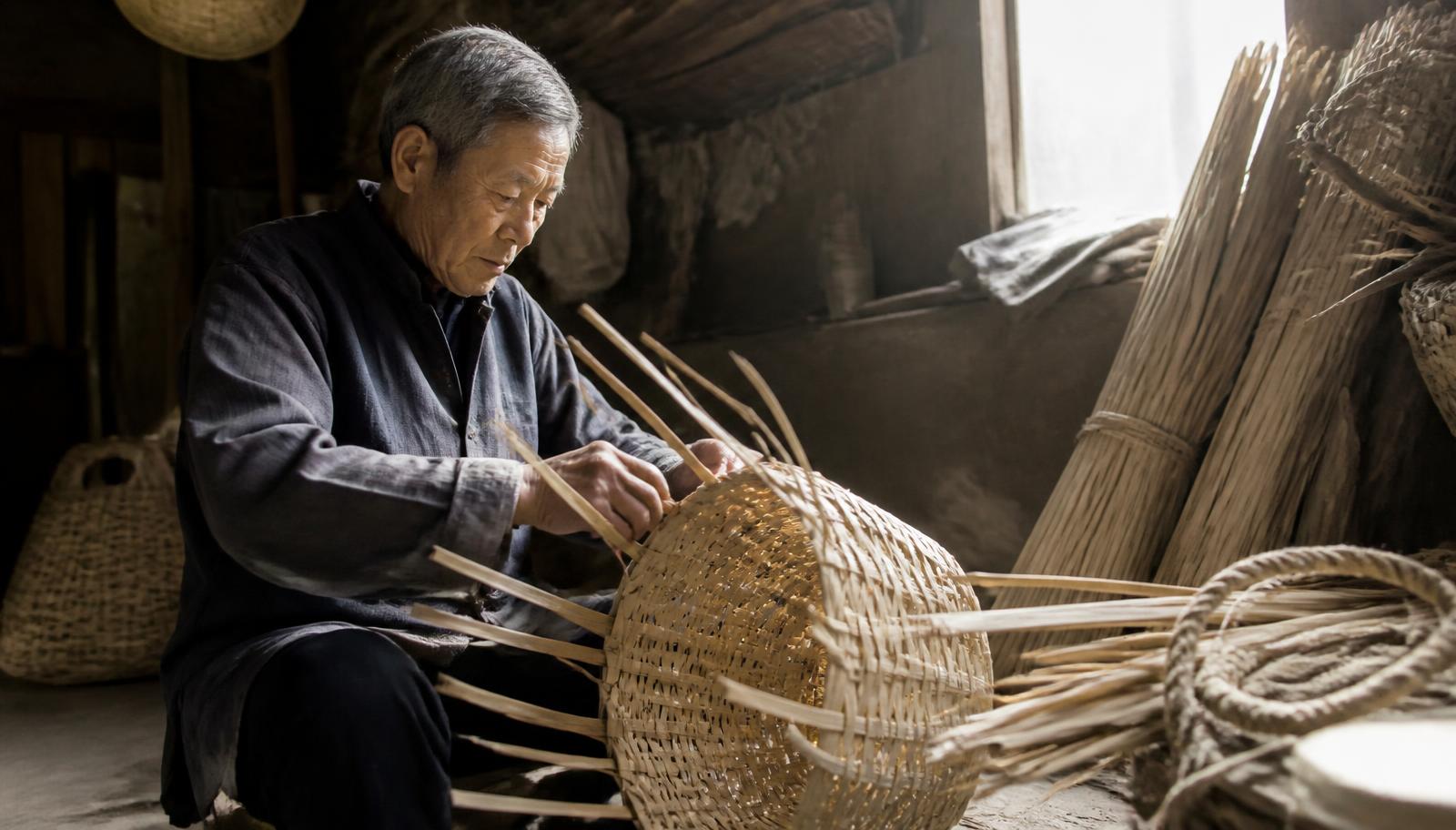
Bamboo weaving is not treated in China as generic manufacturing. Several regional traditions — among them Sichuan's Qingshen bamboo weaving and Zhejiang's Dongyang tradition — are recognised on national intangible cultural heritage lists, with named inheritors responsible for passing technique to the next generation.
What is being protected is knowledge that no machine holds. Which month to cut so the culm carries the least sugar and the fewest insects. How to split a pole into strips thin enough to bend but even enough to hold tension. How to read the difference between the hard outer skin and the softer inner wall, and use each where it belongs. How to close a rim so it will not unravel after a year of being lifted by one side.
How heritage and capacity feed each other
The two are often described as opposites — mass production against handcraft — but on the ground they are the same supply chain.
Machinery handles what machinery is good at: sawing, steaming, drying to a controlled moisture level, sanding, spraying. Hands handle what they must: the weave itself, the joinery, the rim, the correction of a piece that has drifted a millimetre out of true.
That division is why a Chinese bamboo workshop can quote a hotel order in the hundreds and still deliver pieces with a woven face no line can reproduce.
What this means if you are sourcing
Ask which region the material comes from, because grove and climate set the fibre. Ask whether weaving is done in-house or subcontracted to village households, since both are legitimate but only one gives you consistent tension across a large order. Ask how moisture is controlled before finishing, which is the single most common cause of pieces failing after shipment. Ask to see the same item made twice, months apart.
A tradition still being made
The romantic version of this story treats heritage craft as something surviving despite industry. The truer version is that Chinese bamboo weaving has stayed alive because it kept finding work — first for farms and households, now for homes and hotels overseas. Each order placed for a hand-woven piece is one more reason a younger weaver stays at the bench.
Which regions in China produce the most bamboo?
The main bamboo belt runs across southern provinces including Fujian, Jiangxi, Zhejiang, Hunan, Sichuan and Guangxi, where managed groves sit close to splitting, drying, weaving and finishing workshops.
Is Chinese bamboo weaving recognised as cultural heritage?
Yes. Several regional bamboo weaving traditions, including Qingshen in Sichuan and Dongyang in Zhejiang, are listed as national intangible cultural heritage with designated inheritors who train new weavers.
Are bamboo products handmade or machine-made?
Most are both. Cutting, steaming, drying and sanding are mechanised for consistency, while splitting, weaving, joinery and rim finishing remain handwork.