 JAPANDIWOVEN
Sustainable Procurement Guide for Hospitality Venues
Sustainability claims are easy to print and hard to prove. For hotels, spas and restaurants, procurement is where an environmental promise becomes real — or becomes greenwashing. This guide sets out what to ask for, what evidence to collect and how natural woven goods fit into a credible programme.
1. Know what "sustainable" means for natural fibre
Bamboo and rattan are among the fastest-renewing raw materials used in interiors.
| Material | Harvest cycle | Notes |
|---|---|---|
| Bamboo | 3-5 years | Regrows from the same root system; no replanting required |
| Rattan | 5-7 years | A climbing palm; harvesting supports standing forest value |
| Seagrass / water hyacinth | Annual | Often harvested from waterways where growth must be controlled |
| Hardwood | 25-60 years | Requires certified forest management |
Because the plant regrows from an existing root system, a woven basket carries a materially lower embodied footprint than a moulded plastic or resin equivalent.
2. Build a supplier evidence file
For each supplier, collect and keep on file:
- Material declaration stating species and harvest region.
- Finish and coating declaration, ideally low-VOC or water-based.
- Packaging declaration confirming plastic-free materials.
- Workshop and labour statement: location, workforce, working arrangement.
- Photo or video evidence of the actual workshop, not stock imagery.
If a supplier cannot show the workshop, you cannot verify the claim. Treat that as a red flag, not a formality.
3. Zero-plastic packaging in practice
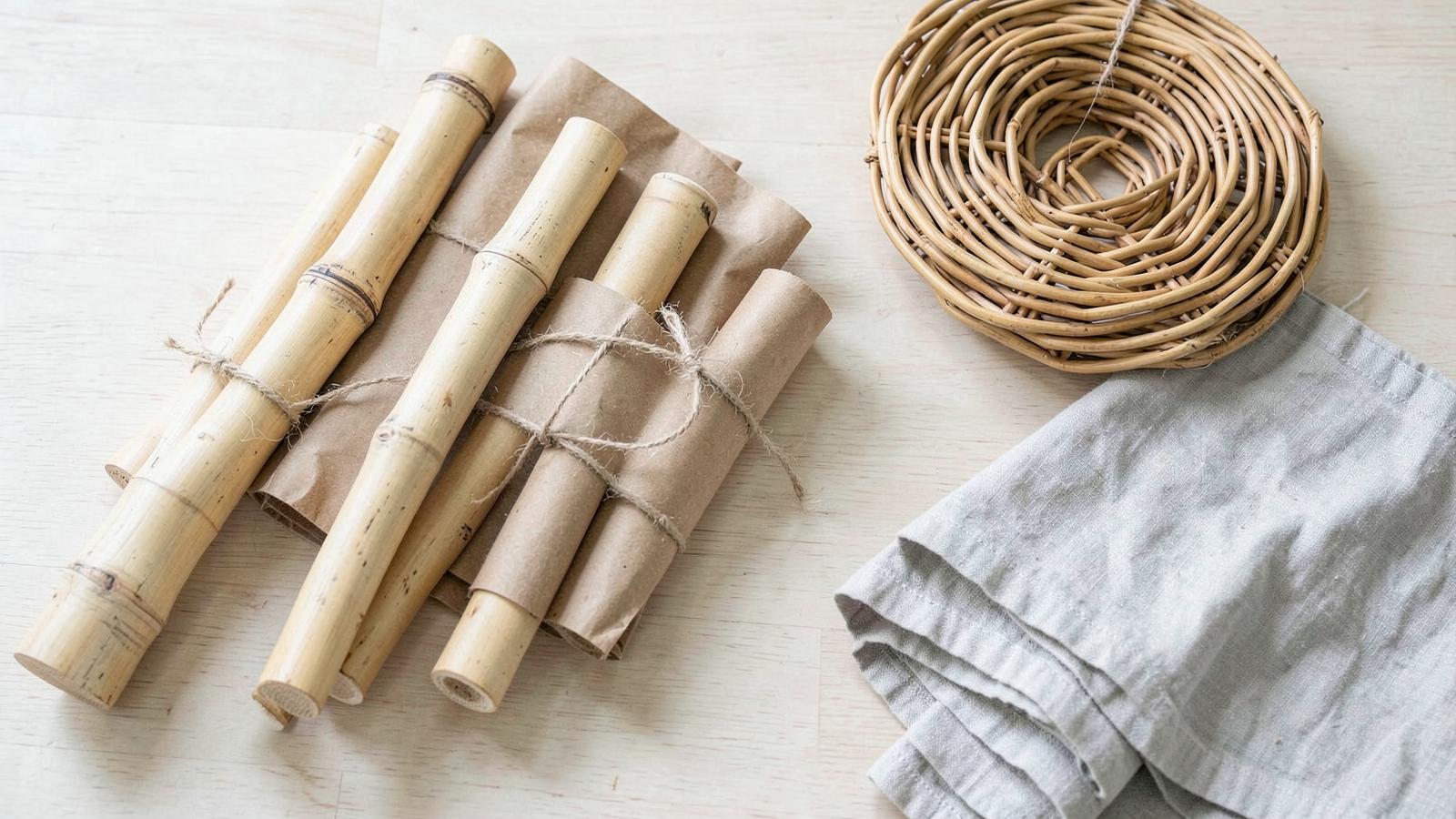
- Kraft paper wrap and paper tape instead of bubble wrap and PE film.
- Recycled or FSC-sourced cartons, printed with soy or water-based ink.
- Nested packing to reduce cubic volume and shipping emissions.
- No polybags, no foam corner protectors, no plastic strapping.
Ask for a packing photo before shipment. It is the single cheapest verification step in the whole process.
4. Ethical handcraft
Handwoven goods are produced by skilled artisans, often in rural workshops and home-based cooperatives. Responsible sourcing means:
- Piece-rate pay benchmarked above regional agricultural income.
- No child labour, verified by workshop visit or third-party statement.
- Stable repeat orders rather than one-off volume spikes, which protect income continuity.
- Named craft recognition — knowing which region and which technique produced your order.
5. Lifecycle and end of life
Specify for longevity first: repairability beats recyclability.
- Ask whether rims and handles can be re-lashed on site.
- Keep 5% spares from the same batch.
- At end of life, untreated natural fibre is compostable; heavily lacquered items are not, so keep coatings minimal.
6. A practical procurement checklist
| Stage | Action | Evidence to keep |
|---|---|---|
| Shortlist | Request material and packaging declarations | PDF declarations |
| Sampling | Approve golden sample, check finish odour and coating | Sample photos, retained sample |
| Pre-production | Confirm material lot and workshop | Workshop photos |
| Pre-shipment | Verify plastic-free packing | Packing photos |
| Post-delivery | Record defect rate and repairs | Inspection log |
Frequently asked questions
Is bamboo really more sustainable than plastic for hotel amenities?
Yes in most cases. Bamboo regrows from its root system in three to five years, requires no petrochemical feedstock and is compostable when left untreated.
What documents should I request from a natural material supplier?
A material declaration, coating and finish declaration, plastic-free packaging statement and workshop or labour information.
Can woven goods be shipped without any plastic?
Yes. Kraft wrap, paper tape and recycled cartons protect woven items adequately for sea freight when packed nested and dry.
How do I avoid greenwashing in my sustainability reporting?
Report only what you can evidence with supplier documents and photographs, and state material origin and packaging method rather than generic claims.
Does sustainable sourcing cost more?
Unit cost is usually comparable; the real saving comes from longer service life and lower replacement rates over a five-year cycle.
How can procurement support artisan communities directly?
Place steady repeat orders rather than one-off volumes, and allow realistic lead times so workshops are not forced into overtime production.
Next step
Our trade team can supply material declarations, packaging specifications and workshop documentation for procurement review.