 JAPANDIWOVEN
Bamboo Instead of Plastic: Handwoven Bamboo & Rattan as Eco-Friendly Materials for Japandi Homes
Few materials have had a year like bamboo. Since China and the International Bamboo and Rattan Organisation (INBAR) launched the "Bamboo as a Substitute for Plastic" initiative, the idea has spread from policy forums to retail shelves. Retailers facing plastic restrictions in Europe and beyond are asking a simple question: what can replace plastic without losing durability, price or style? Increasingly, the answer grows in a forest.
Why bamboo, and why now
- It renews fast. Many bamboo species reach harvestable maturity in three to five years and regrow from the same root system, without replanting.
- It replaces everyday plastic. Storage baskets, trays, lampshades, utensils, packaging inserts and display fixtures can all be made from bamboo or bamboo-blend fibre.
- It fits the rules. Packaging and single-use plastic regulations push buyers toward materials that are renewable, reusable or compostable at end of life.
- Shoppers like it. Natural texture fits the Japandi and warm-minimal interiors that continue to lead home décor.
From hand craft to dependable supply
The challenge has never been demand; it has been consistency. A plastic tub is identical every time. A woven basket is not. "Bamboo instead of plastic" only works at retail scale when makers can deliver:
- Stable materials — bamboo that is properly dried, treated against mould and insects, and graded by thickness.
- Repeatable sizes — jigs, templates and sample sign-off so a reorder matches the first batch.
- Clear documentation — material descriptions, care instructions and packing that buyers can pass on to customers and regulators.
- Low-plastic packaging — paper wrapping and kraft cartons instead of foam and poly bags.
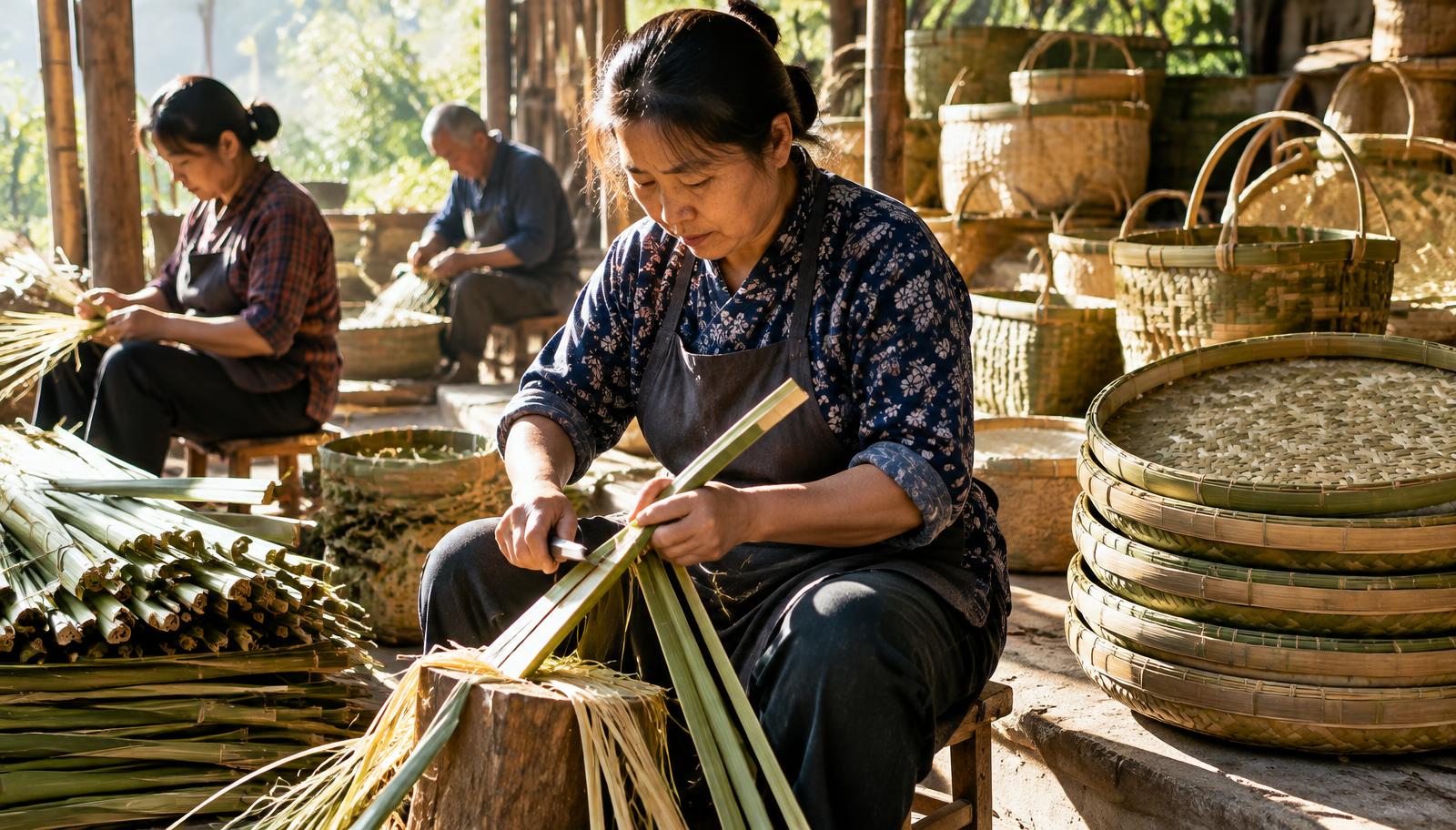
Workshops in southern China's weaving regions have spent the last few years upgrading exactly these steps, turning traditional skill into reliable B2B supply.
What buyers should ask for
When replacing plastic SKUs with bamboo, ask suppliers about moisture content, finishing (natural, lacquered or oiled), load testing for storage pieces, and how products are packed. Order samples, check the weave tension and the edges, and confirm lead times before launch.
Bamboo weaving, rattan weaving and the Japandi look
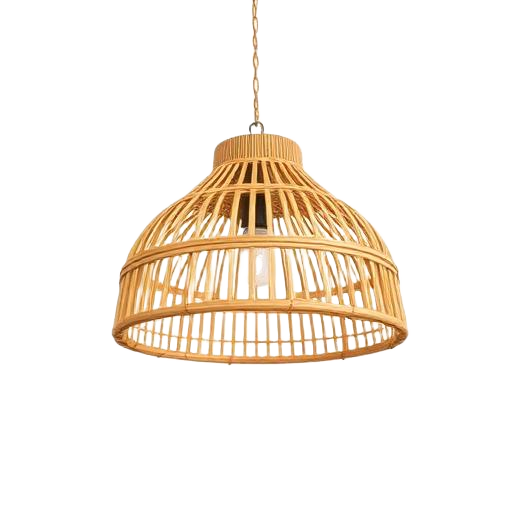
Replacing plastic is not only a compliance story; it is a design story. Handwoven bamboo and rattan weaving bring the warm texture that defines Japandi interiors, the blend of Japanese restraint and Scandinavian comfort. Their small irregularities echo wabi-sabi, the Japanese appreciation of natural, imperfect and ageing materials. A bamboo storage basket or rattan pendant light does the job of a plastic product while adding the calm, organic character shoppers look for.
For buyers building a range of eco-friendly materials, bamboo and rattan work well together: bamboo for light, rigid trays and lampshades; rattan for flexible, durable baskets and furniture accents; paper rope and seagrass for soft storage.
How JapandiWoven helps
JapandiWoven works with weaving workshops in Bobai, Guangxi, to offer bamboo, rattan and natural-fibre pieces designed for modern interiors. In-stock items mix within the same category from 30 pieces, OEM and logo work start at 50 pieces per design, stock ships in 3–5 working days and custom orders take 25–45 days, under EXW, FOB or DDP terms.
Explore the shop, download the Trade Lookbook, or send a request through our wholesale page.