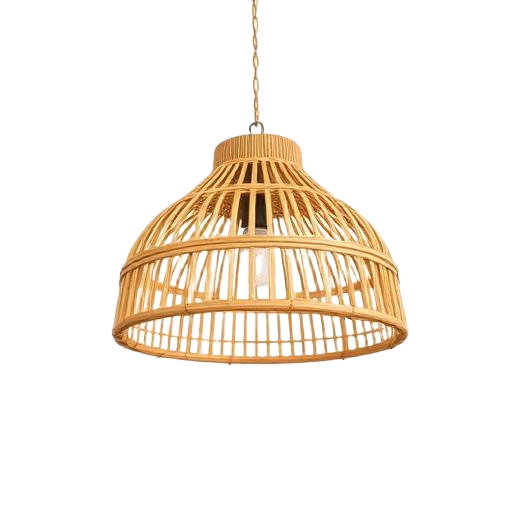
 JAPANDIWOVEN
Bamboo vs Rattan: A Complete Comparison for Home and Hospitality
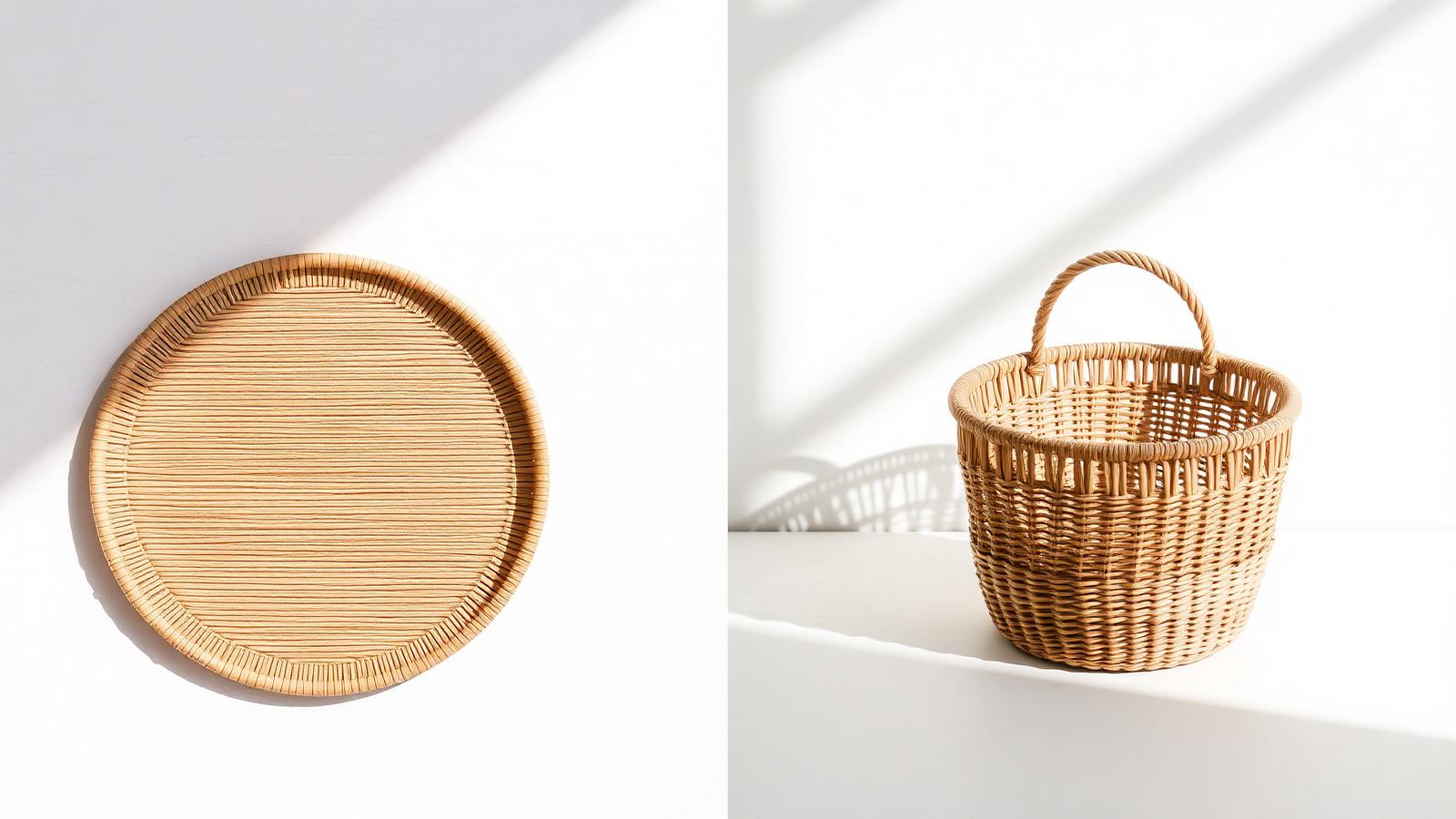
Bamboo and rattan look related and are constantly confused, but they are botanically and structurally different materials. Bamboo is a hollow grass that grows upright and is split into flat strips. Rattan is a solid climbing palm vine that can be steam-bent into curves and peeled into flexible cane for weaving.
Choosing correctly is mostly about three questions: does the piece need to hold a curve, will it get wet, and does it carry weight?
The complete comparison table
| Property | Bamboo | Rattan |
|---|---|---|
| Botanical type | Grass (Poaceae), hollow culm | Climbing palm vine, solid core |
| Structure | Hollow, splits into flat strips | Solid, peels into round cane |
| Bendability | Low — resists curves unless laminated | High — steam-bends into tight curves |
| Tensile strength | Very high along the grain | High, more flexible |
| Weight | Light, rigid | Light, springy |
| Moisture tolerance | Good when sealed; can split if soaked | Good; swells and loosens if repeatedly soaked |
| Outdoor suitability | Covered outdoor only | Covered outdoor only (natural rattan) |
| Growth cycle | Harvest in 3–5 years | Harvest in 5–7 years |
| Price level | Lower, more stable | Higher, more volatile |
| Typical use | Trays, boxes, tableware, flat panels | Baskets, pendant lights, curved furniture |
| Repairability | Hard — splits are permanent | Easier — cane can be rewoven |
| Feel | Smooth, cool, structured | Warm, tactile, organic |
Strength: different kinds of strong
Bamboo has exceptional tensile strength along the grain, which is why it works for rigid flat forms — serving trays, tissue boxes, drawer dividers, table surfaces. It resists sagging.
Rattan's strength is in flexibility. A rattan basket handle takes daily load because the cane absorbs and returns force instead of resisting it. Push bamboo into that role and it eventually cracks at the bend.
Rule of thumb: bamboo for flat and structural, rattan for curved and load-bearing.
Moisture and where each material fails
Neither material likes standing water. In practice:
- Bathroom amenity trays: bamboo, sealed — it wipes clean and stays flat
- Bathroom laundry and towel baskets: rattan — airflow and flex tolerate humidity better
- Kitchen bread baskets: rattan or seagrass — breathable
- Planters: rattan or wicker with a removable liner, always
- Covered patio: both, with a sheltered position and seasonal drying
Failure modes differ. Bamboo splits along the grain when it dries too fast after soaking. Rattan loosens at the weave when repeatedly wetted and loaded. Both are avoidable with a dry wipe rather than a rinse.
Sustainability compared
Bamboo regenerates from its root system and reaches harvest in 3–5 years without replanting, which is why it dominates sustainability marketing. Rattan takes 5–7 years but grows inside standing forest, so well-managed rattan harvesting gives forests economic value and discourages clearing.
Both are plant-based and fully biodegradable when left undyed or plant-dyed. The meaningful sustainability question is not bamboo versus rattan — it is whether the material is FSC-certified, whether finishes are plant-based, and whether the weaving wage supports the community that harvests it.
Cost and lead time
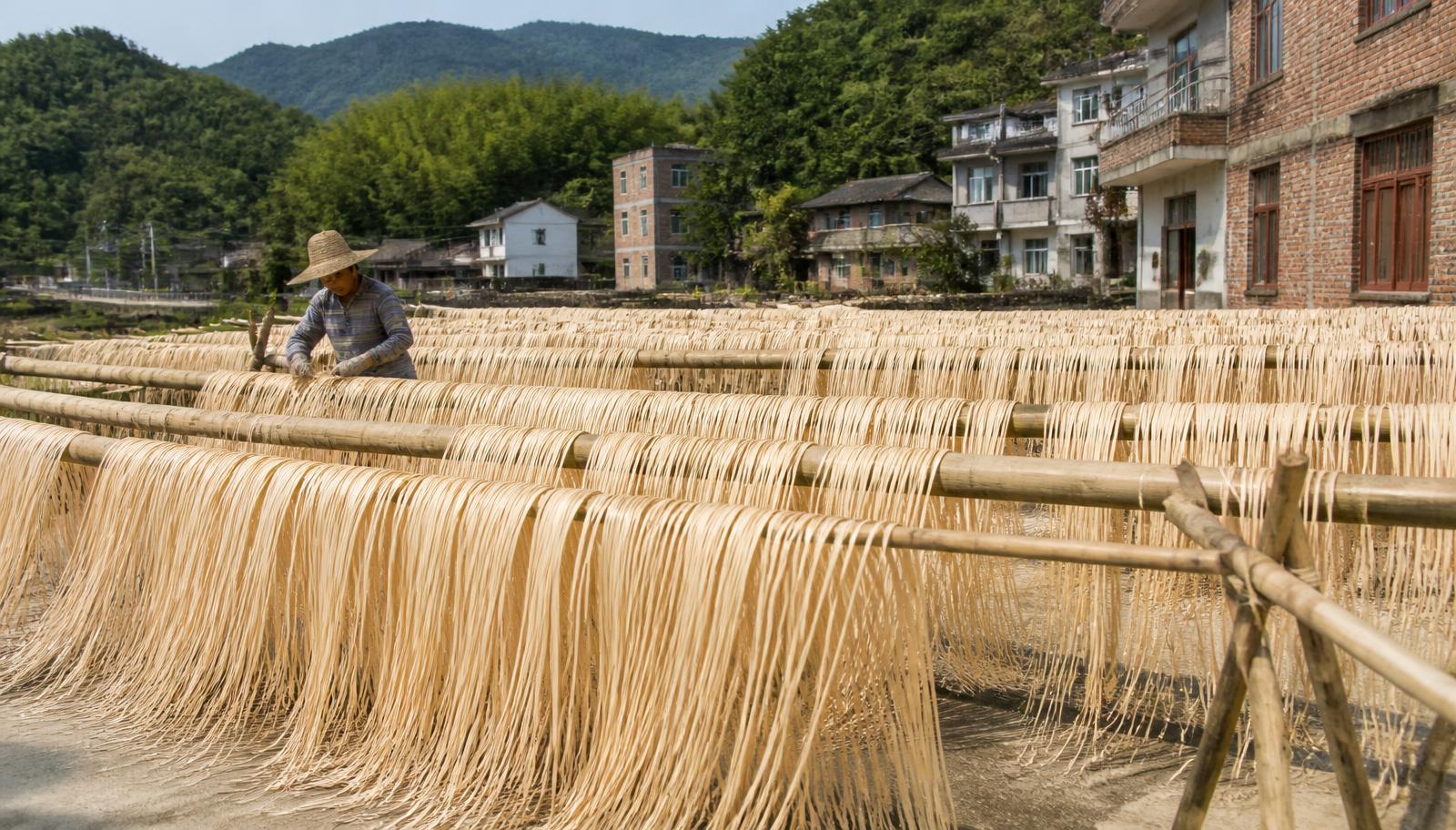
Bamboo is typically 15–30% cheaper per finished piece and prices more stably, because the growth cycle is shorter and the strips are machine-split before hand-weaving. Rattan cane pricing moves with harvest seasons and export policy in Southeast Asia.
Hand-weaving time is comparable: a mid-size piece in either material takes 8–12 hours of artisan work in our Bobai County workshops.
Care: 60 seconds a month
- Dust with a dry brush or vacuum brush attachment
- Wipe spills immediately with a barely damp cloth, then dry
- Never soak, never machine wash, never put in a dishwasher
- Keep out of direct all-day sun to prevent brittleness and fading
- Re-oil rattan lightly once a year in very dry climates
Which should you choose?
Choose bamboo if the piece is flat, structural, food-adjacent, needs frequent wiping, or the budget is tight.
Choose rattan if the piece is curved, carries weight by a handle, needs airflow, or is a visual centrepiece such as a pendant light.
Choose mixed construction — a bamboo frame with rattan weave — when you need both rigidity and a soft organic surface. Most of our hospitality pieces are built this way.
What is the difference between bamboo and rattan?
Bamboo is a hollow grass split into flat strips, rigid and best for trays and boxes. Rattan is a solid climbing palm vine that bends into curves, best for baskets, handles and pendant lighting.
Is bamboo stronger than rattan?
Bamboo has higher tensile strength along the grain and resists sagging, while rattan is more flexible and better at absorbing repeated load, such as a basket handle. Each is stronger for a different job.
Which is more sustainable, bamboo or rattan?
Bamboo regrows in 3–5 years without replanting, while rattan takes 5–7 years but grows inside standing forest and gives that forest economic value. Both are biodegradable; certification and finishes matter more than the species.
Can bamboo or rattan be used outdoors?
Both are suitable only for covered outdoor areas. Natural bamboo and rattan degrade under direct rain and full sun, so use a sheltered position and bring pieces in during wet seasons.
Which is cheaper, bamboo or rattan?
Bamboo is typically 15–30% cheaper per finished piece and prices more stably, because its growth cycle is shorter and strips are machine-split before hand-weaving.
How do I clean handwoven bamboo and rattan products?
Dust with a dry brush, wipe spills with a barely damp cloth and dry immediately. Never soak, machine wash or dishwash either material.