 JAPANDIWOVEN
How an Export Alliance Is Growing China's Bamboo Weaving and Rattan Weaving Industry for Japandi Buyers
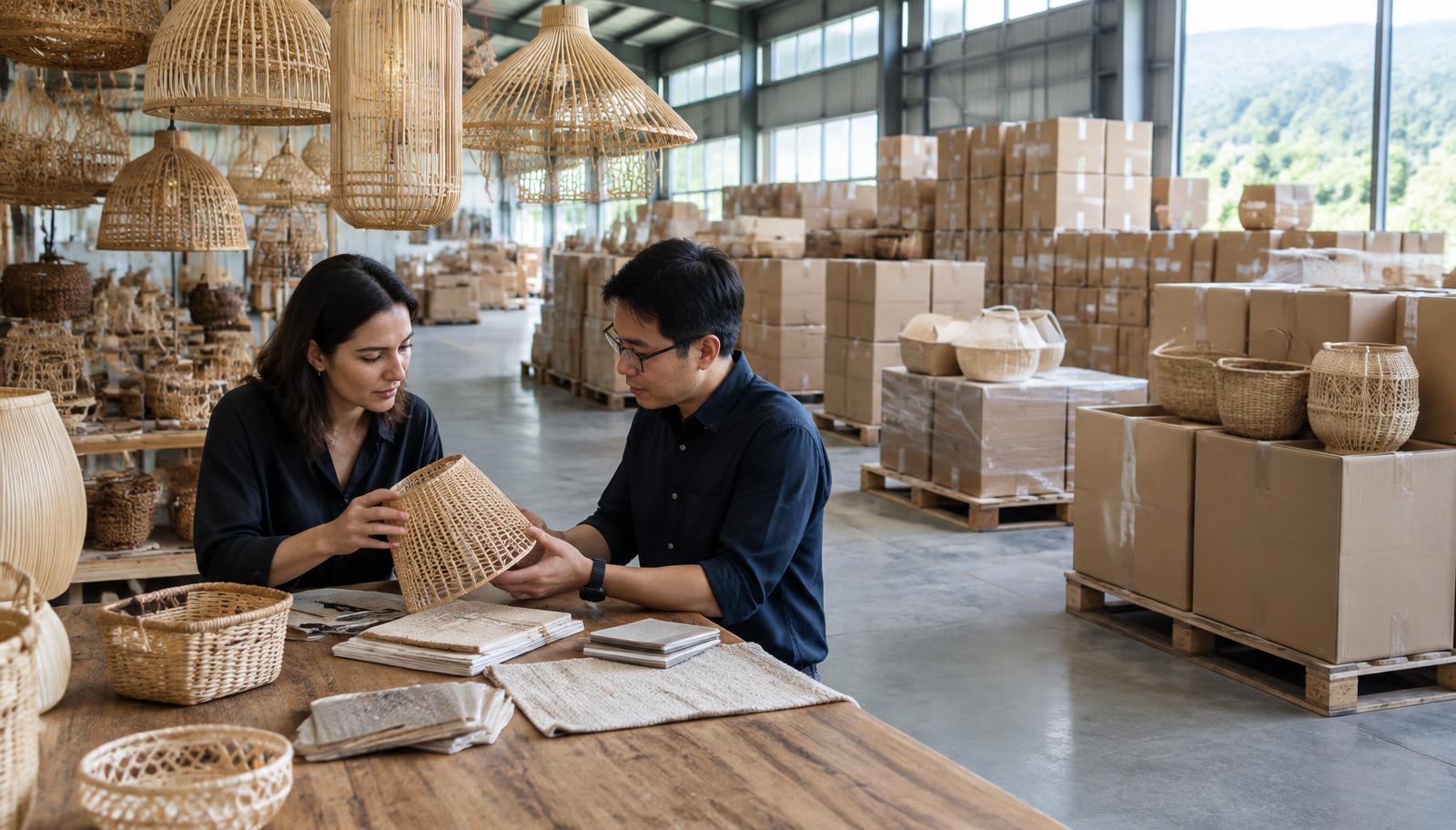
China's rattan, bamboo and natural-fibre weaving industry has deep skill but a familiar problem: thousands of small workshops, each too small to market itself abroad. Overseas retailers, interior designers and hotel buyers want natural products, yet they struggle to find makers they can trust. Export alliances, platforms that bring many producers together under shared design, quality and sales, are closing that gap.
The problem with going it alone
A single workshop usually has a narrow catalogue, little English-language marketing, no overseas sales team and limited experience with export paperwork. Buyers, in turn, face long sourcing trips, inconsistent samples and minimum orders that do not match a boutique's needs.
What an export alliance changes
- One catalogue, many makers. Buyers browse lighting, storage and décor from multiple workshops in one place.
- Shared design direction. Designers translate market trends, such as Japandi, warm minimalism and plastic-free living, into products workshops can make.
- Unified quality standards. Common sampling, inspection and packing rules make reorders predictable.
- Flexible ordering. Mixed orders within a category let smaller retailers test several styles without large commitments.
- Shared marketing. Websites, lookbooks, journal content and trade outreach reach buyers that one workshop never could.
Why it speeds up the industry
When sales and marketing are shared, workshops can focus on what they do best: making. Steady orders justify better drying rooms, tooling and training. Designers get faster feedback from real buyers. The result is a cycle: better products bring more buyers, which brings more investment in quality.
Designing for Japandi and wabi-sabi markets
Overseas demand is driven by style as much as sustainability. Retailers want bamboo weaving and rattan weaving that suit Japandi rooms: clean shapes, natural tones and honest textures. Many also follow wabi-sabi thinking, where visible weave and natural variation are valued rather than hidden. An alliance lets designers turn these trends into simple, repeatable products, and lets workshops present them as eco-friendly materials with clear material and care information.
JapandiWoven's role
JapandiWoven brings together designers, artisans and raw-material supply around Bobai, Guangxi, one of China's established weaving centres. We handle product development, sampling, quality checks and export, while partner workshops weave. Buyers get a single contact for:
- In-stock orders from 30 pieces, mixed within the same category (cross-category mixes by quotation)
- OEM and logo customisation from 50 pieces per design
- 3–5 working days for stock and 25–45 days for custom work
- EXW, FOB or DDP shipping, with a 50% deposit and 50% balance before shipment
If you are a retailer, designer or hotel buyer, start with our Trade Lookbook or contact us on the wholesale page. Workshops interested in joining the alliance are welcome to get in touch as well.