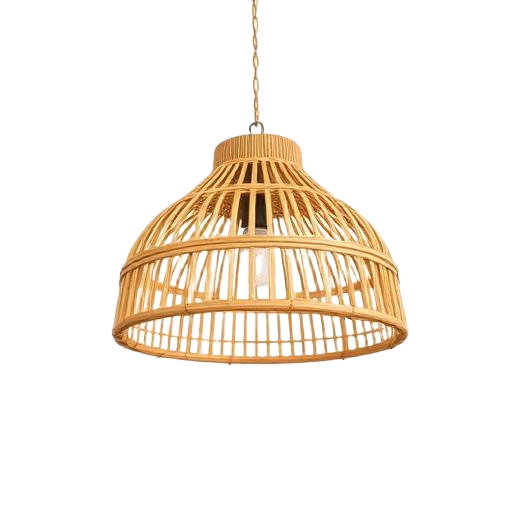
 JAPANDIWOVEN
Guangxi Bamboo Weaving Heritage: Intangible Cultural Heritage in Everyday Objects
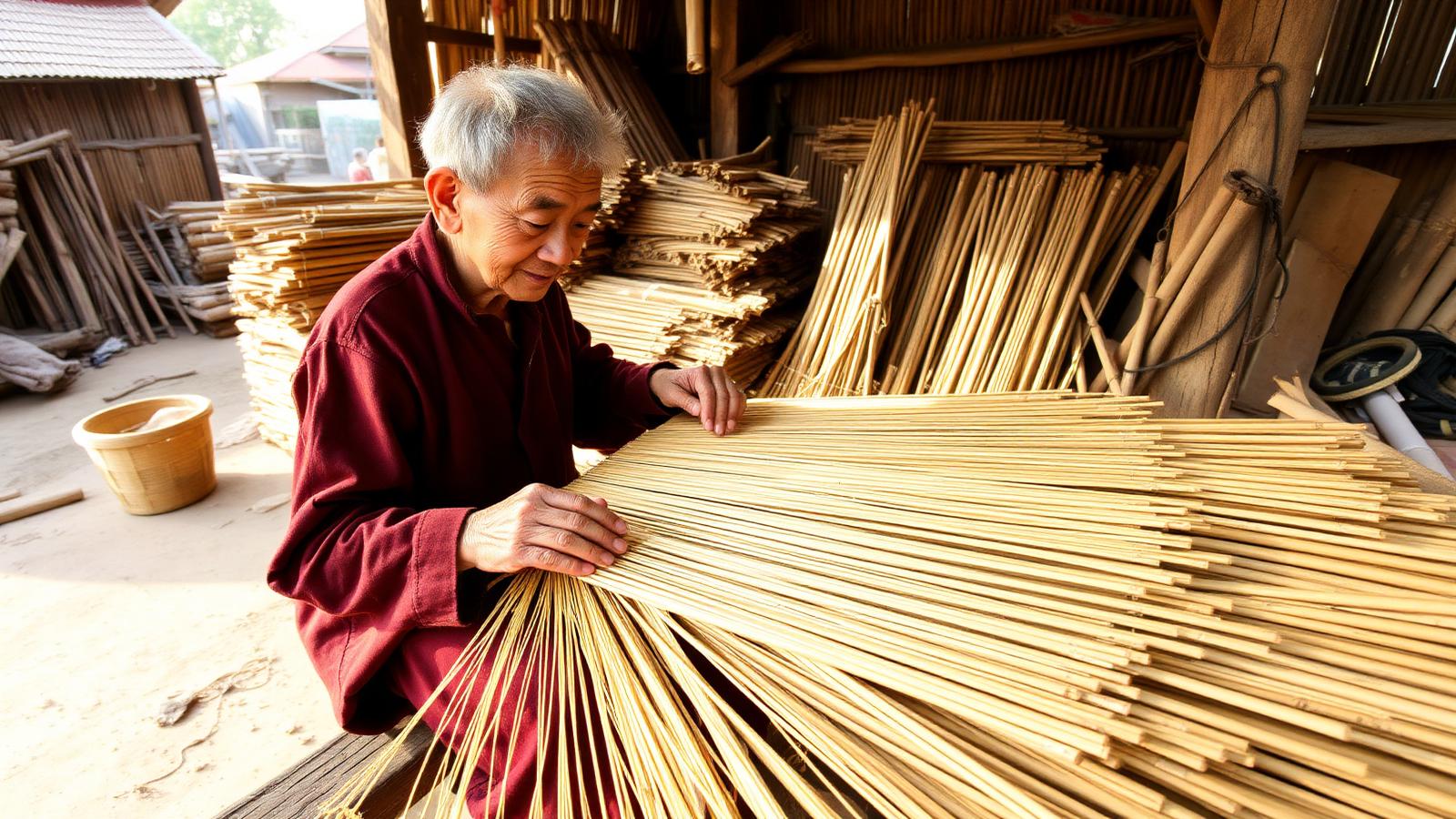
In Guangxi, weaving is not a revival. It never stopped. Bamboo and rattan have been split, soaked and woven in the region's river valleys for centuries — into rice-drying trays, fish traps, steamer baskets, cradle covers and carrying frames — and the same hand movements now shape objects sold into homes in Los Angeles, Copenhagen and Kyoto.
A craft with a documented lineage
Guangxi's subtropical climate produces bamboo that reaches harvest height in three to five years and rattan vine that climbs the forest canopy. Where a material is abundant, technique accumulates. Bamboo weaving traditions across southern China are recognised within China's intangible cultural heritage (feiwuzhi wenhua yichan) system, which lists bamboo-weaving crafts at national and provincial levels and names individual inheritors responsible for transmitting them.
What that recognition protects is not a product. It is a body of knowledge: which culm to cut in which month, how thin a strip can be split before it loses tensile memory, how a rim is locked so it never unwinds.
Bobai County: the cluster that scaled
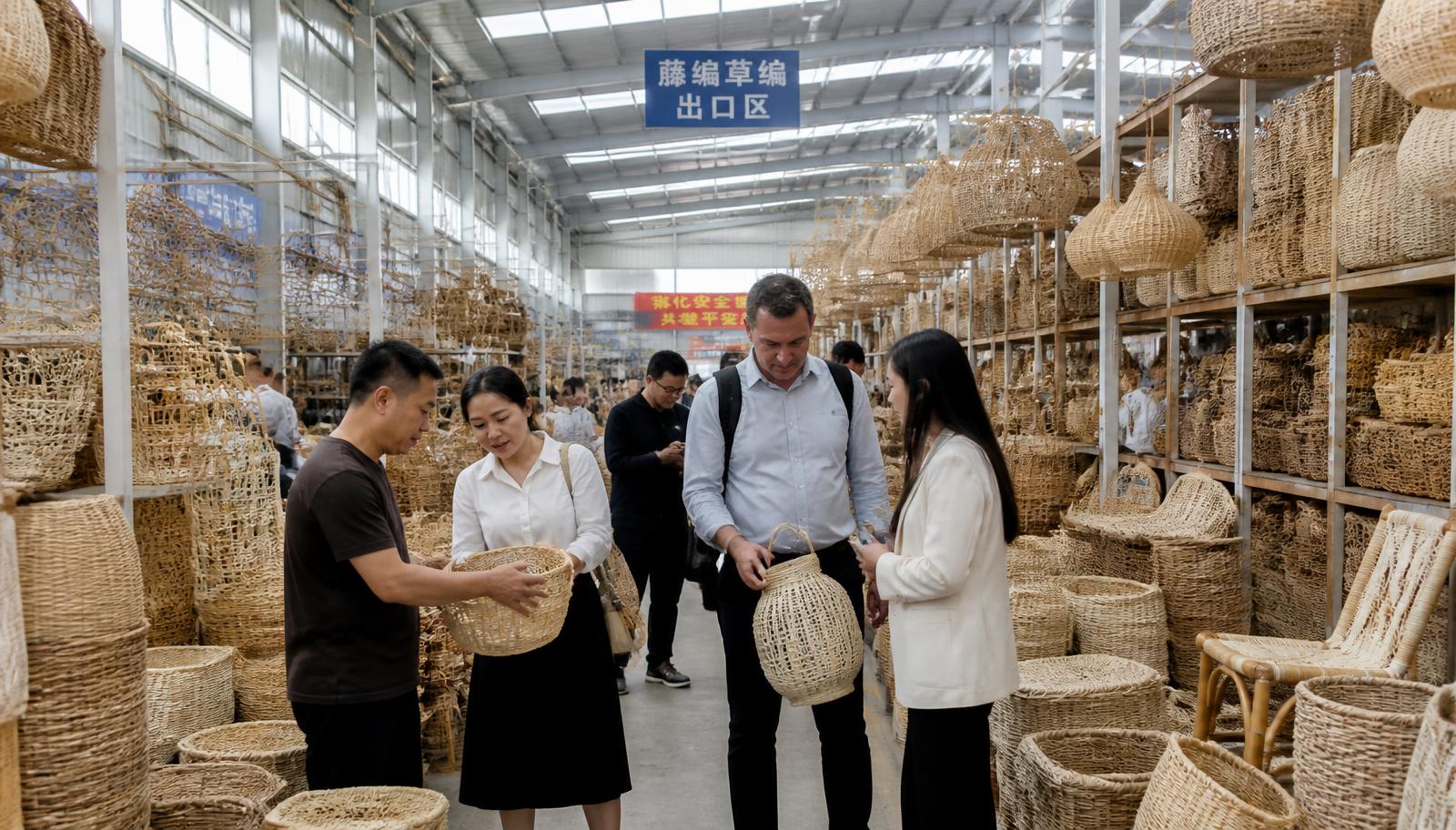
Bobai County in Yulin, Guangxi, is where this tradition became an industry without becoming a factory. Weaving there is organised as thousands of household workshops feeding a dedicated weaving trade market — the Bobai Weaving Trade Centre — where cane, finished goods, and orders change hands.
The structure matters culturally. Because the work stays in homes and courtyards rather than moving onto assembly lines, the transmission chain stays intact: children learn by sitting beside a parent, not by reading a work instruction.
The vocabulary of the weave
A Guangxi weaver does not think in "patterns" as decoration. Each structure solves a problem.
| Weave | Structure | Traditional purpose | Modern use |
|---|---|---|---|
| Plain / over-under | Alternating single strips | Rice and grain trays | Flat bamboo trays, panels |
| Twill | Strips crossed over two or more | Load-bearing carrying baskets | Storage baskets, hampers |
| Hexagonal (open) | Six-way open lattice | Ventilated food and fish baskets | Pendant lamp shades, planters |
| Coiled | Core bundle wrapped with cane | Watertight and rounded vessels | Sculptural bowls, ottomans |
| Twined | Paired weavers twisted around spokes | Rims and structural edges | Basket rims, handles |
The open hexagonal weave is the one Western buyers now recognise most, because it throws the dappled shadow that makes a rattan pendant light photograph so well. In Guangxi it was invented to let air move through a fish basket.
From standing bamboo to finished object
- Cutting — culms are harvested at 3–5 years, in the dry season, when sugar content is lowest and borer risk is least
- Curing — culms are dried or water-cured for weeks; skipping this step is why cheap bamboo goods split
- Splitting — a culm is quartered, then split down to strips as fine as a millimetre, by hand, with a single blade
- Smoothing — strips are drawn through a gauge to equalise width and thickness
- Soaking — strips are soaked to restore pliability just before weaving
- Weaving — the base is set, the walls are raised, the rim is locked; 8–12 hours for a mid-size piece
- Finishing — plant dye or natural finish, then a final dry-down
Steps 3 and 7 separate heritage work from imitation. A machine can split bamboo; it cannot read a culm and decide where the grain will hold.
Transmission: the real fragility
The threat to this heritage was never demand. It was the two decades when weaving paid less than a factory shift in Guangdong, and a generation left. What brought people back was export demand for design-led, story-backed pieces — orders that pay for hours rather than for units.
That is the honest commercial case for buying named-artisan work: the craft survives when the hours are paid for.
An artisan who can support a household by weaving will teach a child to weave. One who cannot, will not.
Heritage in a Japandi room
The reason Guangxi weaving sits so naturally inside Japandi interiors is that both traditions answer to the same discipline: nothing decorative that is not also structural. A Guangxi rim is beautiful because it is the strongest way to end a basket. A Japandi room is calm because nothing in it is surplus.
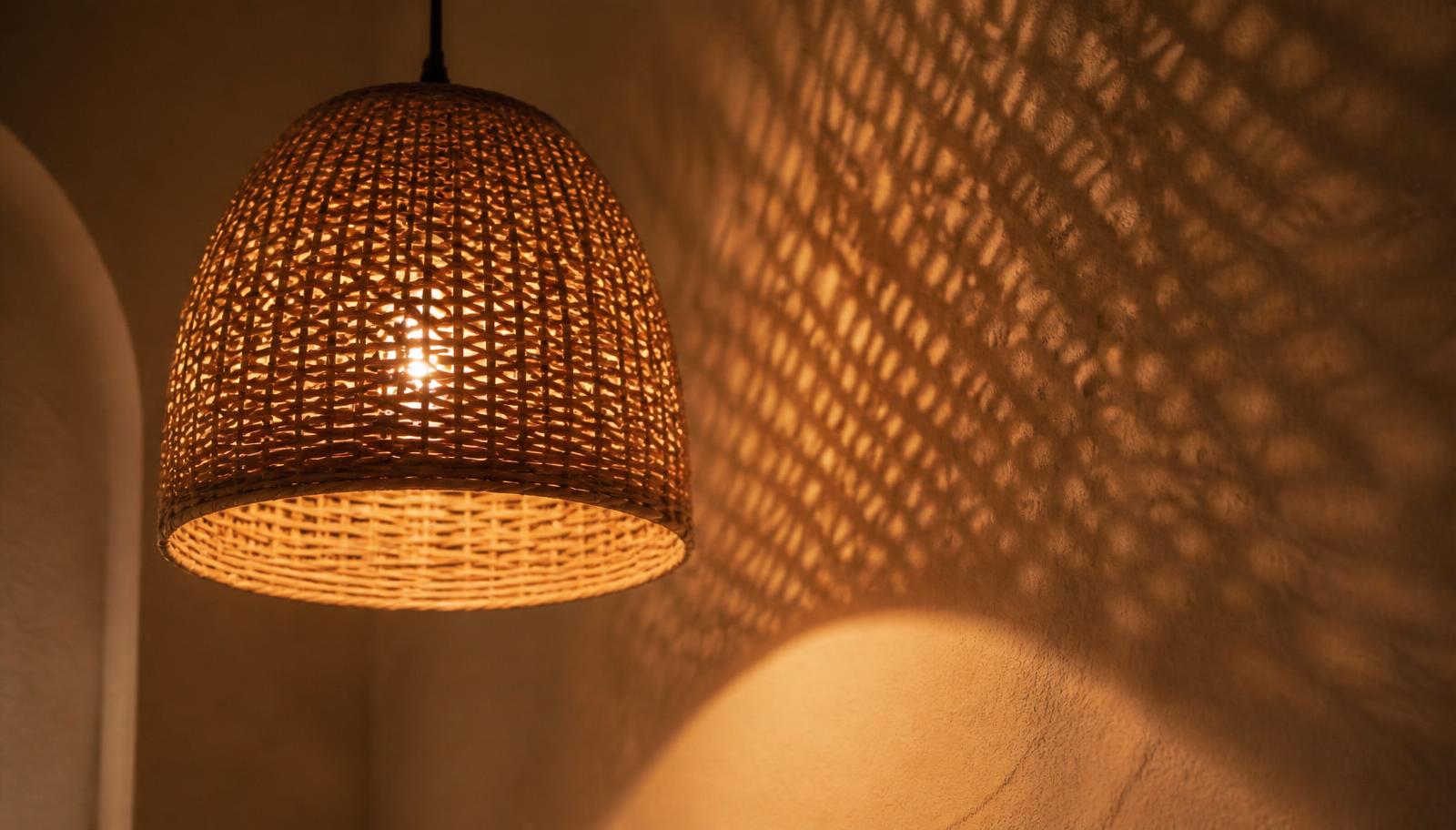
Placed in a modern home, a Bobai basket is not a souvenir of somewhere else. It is a working object that happens to carry four centuries of problem-solving in its structure.
What is Guangxi bamboo weaving?
Guangxi bamboo weaving is a centuries-old craft from southern China in which bamboo culms are cured, hand-split into fine strips and woven into trays, baskets and vessels. Bamboo-weaving crafts are recognised within China's intangible cultural heritage system.
Where is the centre of bamboo and rattan weaving in Guangxi?
Bobai County in Yulin, Guangxi, is the largest cluster. Thousands of household workshops weave there and trade cane and finished goods through the Bobai Weaving Trade Centre.
How long does it take to handweave a bamboo or rattan piece?
A mid-size piece takes 8–12 hours of artisan work, after curing and hand-splitting the bamboo, which adds weeks of preparation before weaving begins.
What are the traditional Guangxi weave patterns?
The main structures are plain over-under, twill, open hexagonal, coiled and twined. Each was developed for a function — ventilation, load-bearing, or watertightness — rather than as decoration.
Why is buying handwoven Guangxi products important for the craft?
The craft declined when weaving paid less than factory work and a generation left the trade. Orders that pay for artisan hours rather than unit volume keep households weaving and keep the skill transmitting to the next generation.