 JAPANDIWOVEN
Handwoven Home Decor Market Report 2026: Size, Growth and Regional Demand
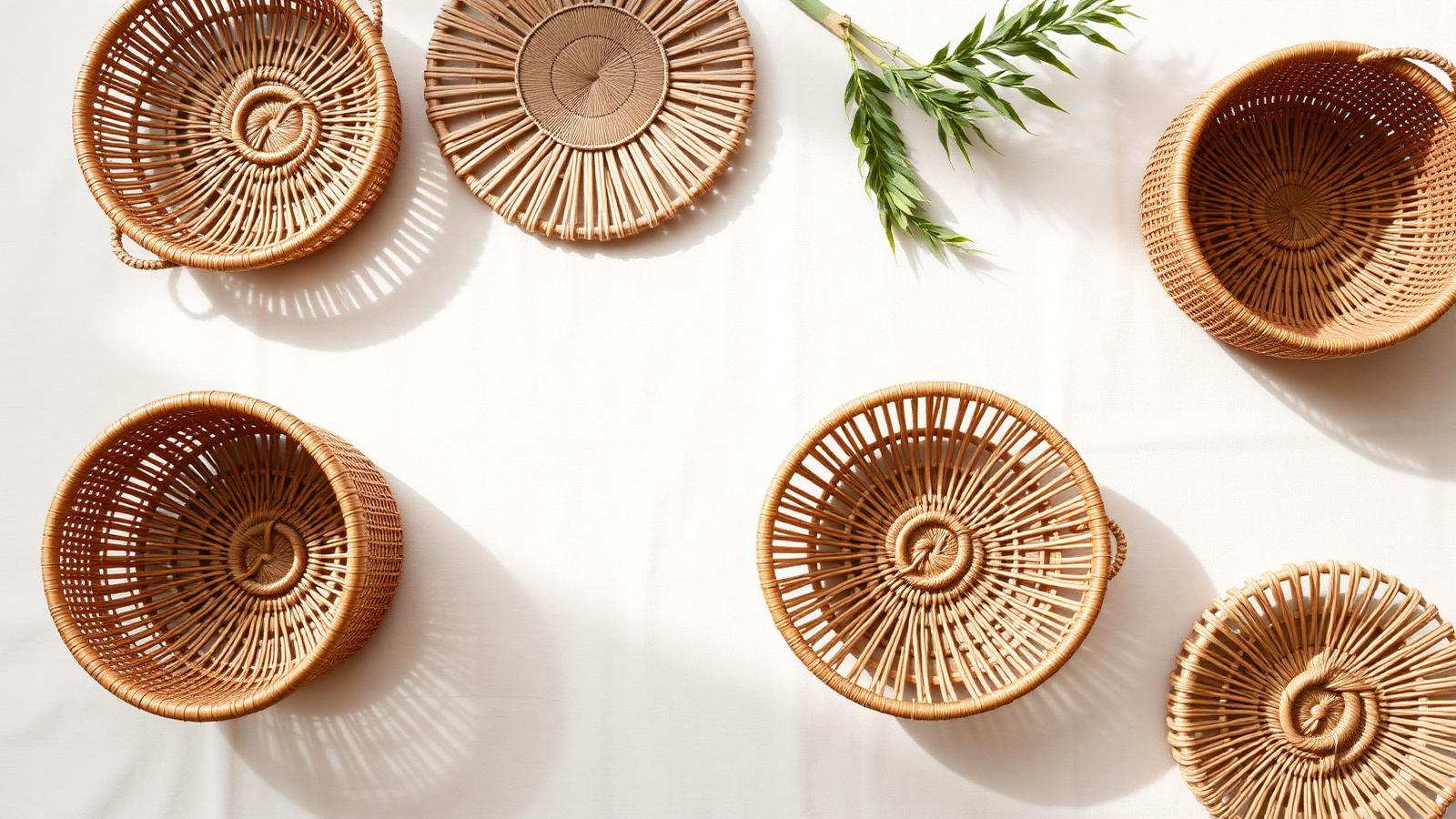
Handwoven home decor — rattan baskets, bamboo trays, seagrass storage, woven pendant lighting — sits at the intersection of three durable demand drivers: the Japandi and warm-minimal interior trend, the shift away from plastic organisation, and hospitality's move toward tactile, natural guest-room materials.
This report summarises the numbers we use internally at JapandiWoven when planning production in Bobai County, Guangxi, and what they mean for retail and hospitality buyers in 2026.
Market size at a glance
Published industry estimates place the categories that contain handwoven decor in the following ranges. Figures are analyst estimates, not audited totals, and definitions differ between sources — treat them as order-of-magnitude guidance.
| Segment | Estimated 2026 size (USD) | Estimated CAGR | Primary demand driver |
|---|---|---|---|
| Global home decor (all materials) | 750–800 billion | 4–6% | Housing turnover, renovation cycles |
| Decorative baskets & storage | 6–8 billion | 5–7% | Plastic replacement, visible storage |
| Rattan & wicker furniture and decor | 8–10 billion | 6–8% | Japandi / coastal interiors |
| Bamboo products (home & tableware) | 60–70 billion | 5–9% | Sustainability regulation, FSC sourcing |
| Hospitality FF&E amenities (woven share) | 1–2 billion | 7–9% | Boutique hotel refurbishment cycles |
Growth rate: why 5–8% is the realistic band
Handwoven decor does not grow like consumer electronics. Supply is capped by human hands: a mid-size rattan basket takes 8–12 hours to handweave, and a skilled Guangxi artisan produces a finite number of pieces per week. Categories constrained by artisan capacity historically compound in the mid-single digits, with spikes when a design trend crosses into mass retail.
The realistic planning band for 2026:
- 5–6% for commodity woven storage sold through mass retail
- 7–9% for design-led, story-backed woven decor with named artisans
- 9–12% for hospitality contract orders, where refurbishment cycles bunch demand
Regional distribution of demand
Demand is concentrated in markets where the Japandi aesthetic has mainstream retail distribution.
| Region | Share of global demand | Notes |
|---|---|---|
| North America | 35–40% | Largest single market; strong basket + planter demand; Q3–Q4 seasonality |
| Europe | 28–32% | Sustainability-led; FSC and biodegradability documentation matters most here |
| Asia-Pacific | 20–25% | Fastest growing; hospitality-led in Japan, Korea, Singapore, Australia |
| Middle East | 5–7% | Hospitality-dominant; large single orders, custom sizing |
| Latin America & Africa | 3–5% | Emerging; price-sensitive |
For a China-based workshop, the practical reading is simple: build for North America first, document sustainability for Europe, and treat Asia-Pacific hospitality as the highest-margin contract channel.
Supply side: where the goods actually come from
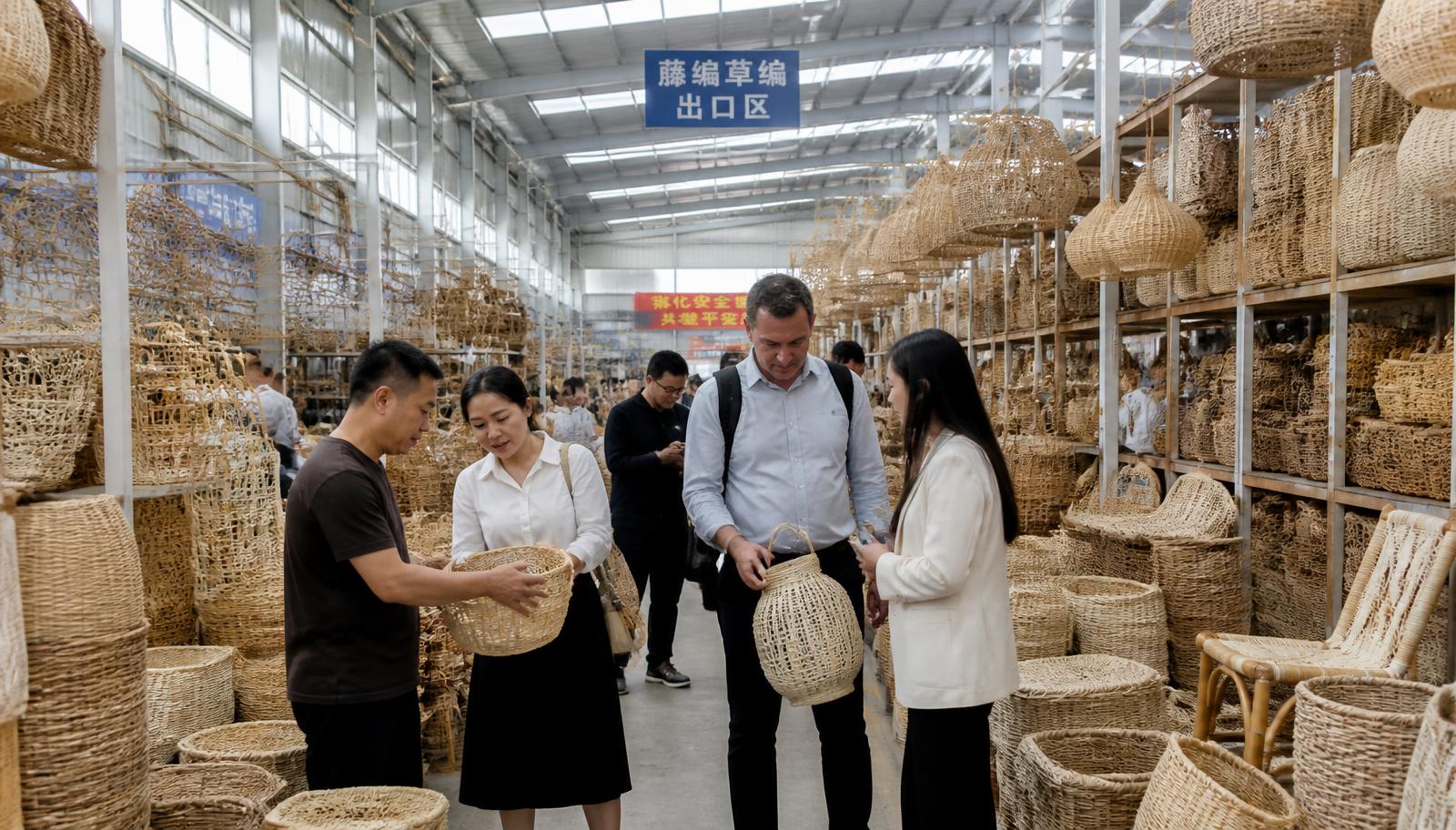
Global handwoven decor supply is concentrated in a handful of weaving regions — Guangxi and Zhejiang in China, Cirebon in Indonesia, Tan Chau in Vietnam, and the Philippines. Guangxi's Bobai County is one of the largest clusters, with a dedicated weaving trade market and generations of household workshops supplying both domestic and export channels.
Sourcing implications for 2026:
- Lead times: 25–40 days production for standard SKUs, 45–60 days for custom hotel programmes
- MOQ: from 10 pieces per SKU for retail, 50 pieces for custom hospitality specification
- Material cost: rattan cane pricing is more volatile than bamboo; bamboo regrows on a 3–5 year cycle and prices more stably
- Capacity risk: artisan availability, not raw material, is the binding constraint in peak season (August–October)
What this means for retail buyers
- Order for Q4 by July. Peak weaving capacity sells out before Western retail placement deadlines.
- Buy stories, not just SKUs. Named artisans and origin documentation measurably lift conversion on design-led product pages.
- Expect price discipline, not deflation. Handwork costs rise with rural wages; the 2026 planning assumption should be flat-to-3% cost inflation.
What this means for hospitality buyers
Hotels buy woven amenities in refurbishment waves. The categories with the strongest 2026 pull are bathroom amenity trays, in-room laundry and slipper baskets, minibar and turndown trays, and spa storage. Contract buyers should plan around a 50-piece MOQ for custom sizing, 45–60 day production, and a replacement allowance for transit damage.
How big is the handwoven home decor market in 2026?
Analyst estimates place decorative baskets and woven storage at roughly USD 6–8 billion globally in 2026, inside a home decor market of roughly USD 750–800 billion, growing at an estimated 5–7% per year.
Which region buys the most handwoven rattan and bamboo decor?
North America accounts for an estimated 35–40% of global demand, followed by Europe at 28–32% and Asia-Pacific at 20–25%.
How fast is the handwoven decor category growing?
The realistic planning band is 5–8% annual growth, with hospitality contract demand growing faster at an estimated 7–9%, because supply is limited by artisan hours rather than raw material.
Where is most handwoven rattan and bamboo decor produced?
Production is concentrated in Guangxi and Zhejiang in China, Cirebon in Indonesia, Vietnam and the Philippines. Bobai County in Guangxi is one of the largest clusters, with its own weaving trade market.
What are typical lead times and minimum order quantities?
25–40 days for standard SKUs and 45–60 days for custom hospitality programmes, with MOQ from 10 pieces per SKU for retail and 50 pieces for custom hotel orders.