 JAPANDIWOVEN
Sustainable Hotel Amenities: A Procurement Guide for Woven Guest-Room Goods
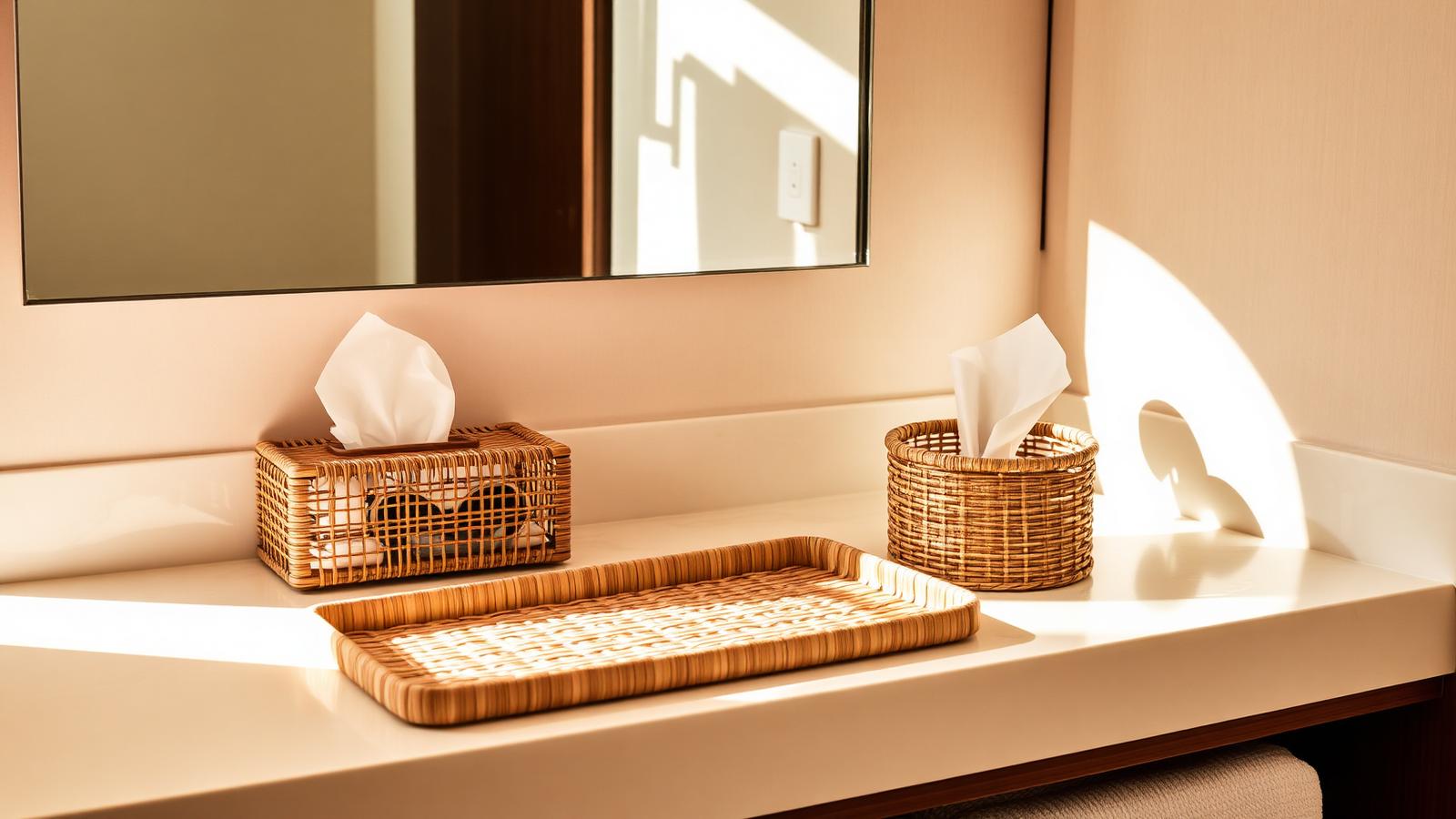
Guests notice plastic. Replacing acrylic amenity trays, PP laundry bins and melamine minibar trays with handwoven bamboo and rattan is one of the lowest-cost, highest-visibility sustainability moves available to a property — and unlike a solar retrofit, it lands in the guest's hands on night one.
This guide covers how to actually buy it: what to specify, what it costs per room, and what breaks.
Step 1: Audit the room, not the catalogue
Walk one room and list every plastic touchpoint. A typical boutique guest room has 8–14:
- Bathroom amenity tray, tissue box cover, cotton-bud jar
- Waste basket (bathroom and bedroom)
- Laundry and shoe-care basket, slipper tray
- Minibar tray, in-room dining tray, kettle tray
- Wardrobe storage box, magazine and welcome-letter tray
- Spa: towel basket, robe basket, treatment trolley trays
Woven replacements exist for all of these. Prioritise by visibility: the bathroom tray and the minibar tray are handled every stay.
Step 2: Specify correctly by zone
| Zone | Recommended material | Why | Typical replacement cycle |
|---|---|---|---|
| Bathroom vanity | Sealed bamboo | Flat, wipe-clean, resists humidity | 24–36 months |
| Bathroom laundry / towels | Rattan or wicker | Airflow, flexes under load | 36–48 months |
| Minibar & in-room dining | Bamboo with sealed surface | Rigid, food-adjacent, easy sanitising | 24–36 months |
| Wardrobe & slipper storage | Rattan | Light, soft-edged, protects fabric | 48+ months |
| Spa & wellness | Rattan with liner | Warm tactile finish, humidity tolerant | 24–36 months |
| Restaurant bread service | Rattan or seagrass | Breathable, keeps crust texture | 12–24 months (high touch) |
Step 3: Budget realistically
Planning figures we quote to hospitality clients:
- Per-room woven amenity set (bath tray, tissue box, waste basket, laundry basket, minibar tray): USD 85–160 at wholesale, depending on size and finish
- Wholesale discount band: 40–55% off retail at contract volume
- MOQ: 10 pieces per SKU for stock items, 50 pieces per SKU for custom sizing or branding
- Lead time: 25–40 days stock, 45–60 days custom
- Sea freight: 30–40 days port to port; air freight for sample and top-up orders
A 60-room property converting the full amenity set typically lands between USD 6,000 and 10,000 — comparable to a single mid-range guest-room mattress line item, and visible in every photo a guest posts.
Step 4: Ask the durability questions
Before signing a contract order, get written answers to these:
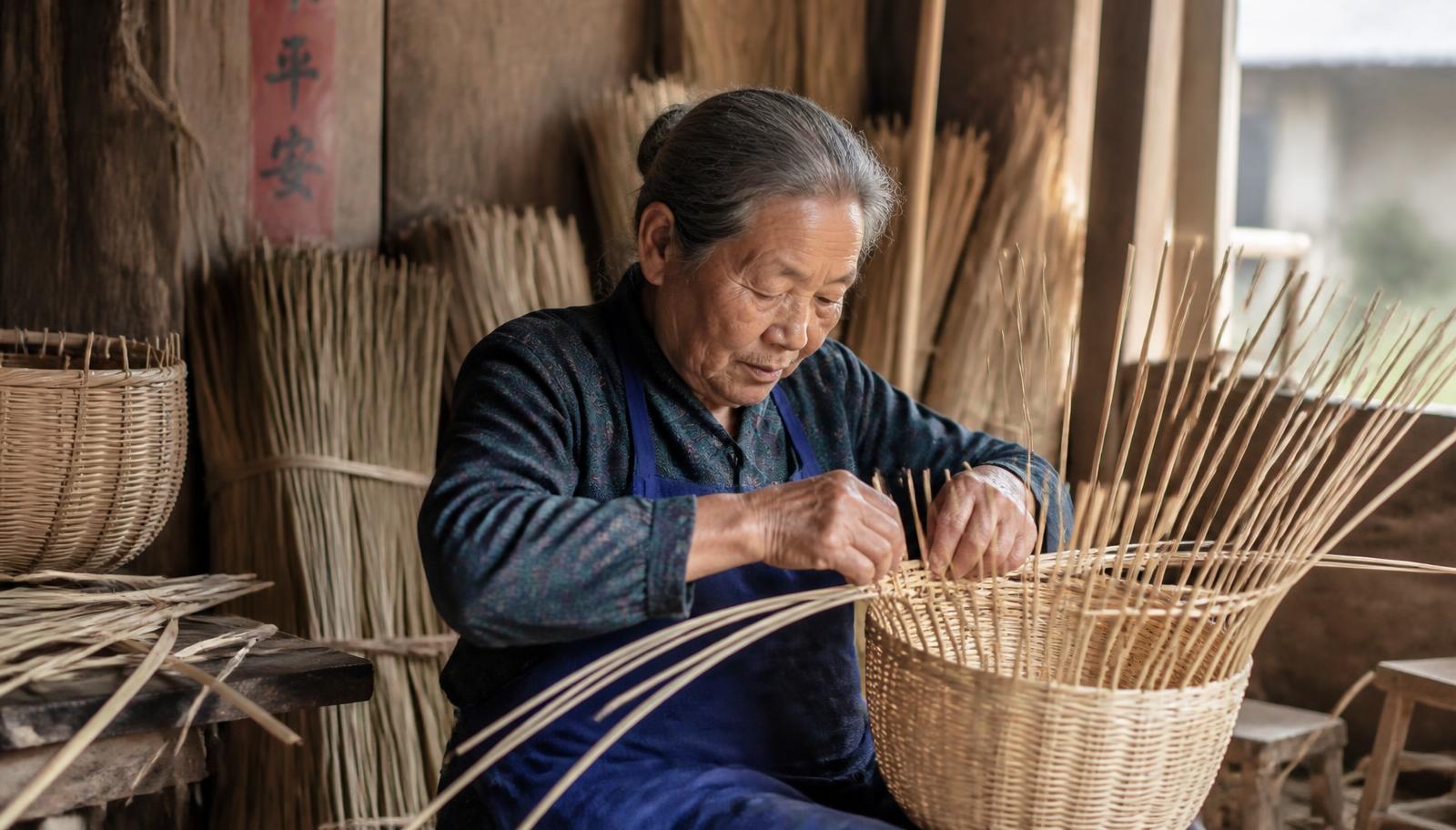
- How many hours of hand-weaving per piece, and by whom? (Ours: 8–12 hours by named Guangxi artisans)
- Is the material FSC-certified, and is the dye plant-based?
- What is the tested load for handles and rims?
- Is the finish rated for daily commercial wiping with hotel-grade cleaner?
- What is the transit-damage policy? (Ours: free replacement if damaged in transit)
- Can the supplier re-run the same weave and colour in 18 months for top-up?
Point 6 is where most hospitality woven programmes fail. Artisan production has natural colour variation between harvests; lock a reference sample with your supplier at first order and require future batches to match it.
Step 5: Brief housekeeping
Woven amenities fail from cleaning, not from use. A one-page housekeeping card prevents almost all of it:
- Dry brush or vacuum weekly
- Damp wipe only — never spray cleaner directly into the weave
- Dry immediately; never leave standing water in a tray
- Rotate bathroom pieces out for a full dry-down monthly in humid climates
Properties that brief housekeeping report replacement cycles roughly twice as long as properties that do not.
Step 6: Tell the guest
Sustainability procurement earns its return when it is legible. A single line on the in-room card — the material, the region, the artisan hours — converts a basket into a story guests photograph and repeat.
Custom projects
Custom hotel programmes typically involve dimension changes to fit an existing vanity or trolley, a branded woven or burned logo detail, and a colourway matched to the FF&E palette. Allow 10–14 days for sampling before the 45–60 day production window, and order a 5–8% overage as an in-house replacement stock.
What are sustainable hotel amenities made of?
The most common sustainable amenity materials are handwoven bamboo, rattan and seagrass, usually plant-dyed and fully biodegradable, replacing acrylic, PP and melamine trays, bins and boxes.
What is the minimum order quantity for hotel woven amenities?
Stock items start at 10 pieces per SKU. Custom sizing, custom colour or branded pieces require 50 pieces per SKU.
How much does it cost to convert a guest room to woven amenities?
A full per-room set of bath tray, tissue box, waste basket, laundry basket and minibar tray costs roughly USD 85–160 at wholesale, so a 60-room property typically budgets USD 6,000–10,000.
Are rattan baskets durable enough for hotel daily use?
Yes, when specified by zone and cleaned correctly. Rattan laundry and storage baskets typically last 36–48 months in guest rooms; bathroom and minibar trays are usually replaced every 24–36 months.
Can I add my hotel logo to bamboo trays?
Yes. Logos can be woven, embossed or burned into bamboo and rattan pieces. Branded pieces require a 50-piece MOQ and 10–14 days of sampling before production.
How long does shipping take from China to the US or Europe?
Production is 25–40 days for stock items and 45–60 days for custom programmes, plus 30–40 days sea freight port to port. Air freight is available for samples and urgent top-ups.